WAHCKon 2013 Standard Badge
Ticket-included Perth hacker-con identity badge
WAHCKon's official 2013 ticket page says the standard ticket included a WAHCKon 2013 badge, placing the Perth conference in the early Australian hacker-con badge record.
Country dossier
Worldwide badge coverage for Australia, grouped into seeded badges, event editions, add-ons, operational issues, resources, and evidence sources.
Seeded artifacts
Ticket-included Perth hacker-con identity badge
WAHCKon's official 2013 ticket page says the standard ticket included a WAHCKon 2013 badge, placing the Perth conference in the early Australian hacker-con badge record.
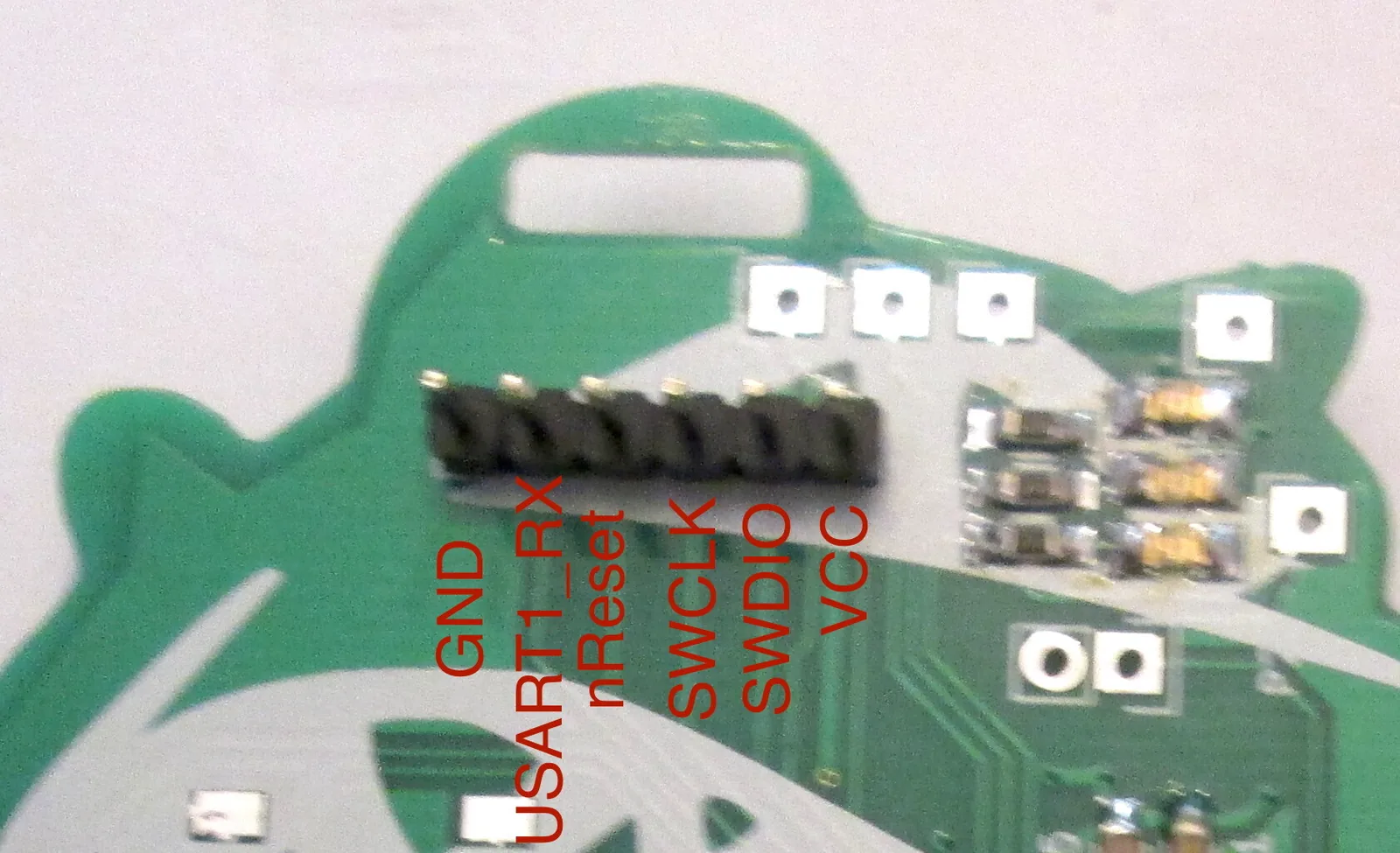
STM32 Hardware Hacking Village badge
Ruxcon 2015's Hardware Hacking Village badge is preserved here as an Australian STM32 badge with public KiCad/Gerber files, schematic material, firmware examples, SMD assembly instructions, CR2032 power, and SWD/OpenOCD programming notes.
Home-made Arduino badge with conference schedule display
BSides Canberra 2016 is represented by official event context and a contemporary Register report saying delegates received a home-made Arduino badge that displayed the conference running order.
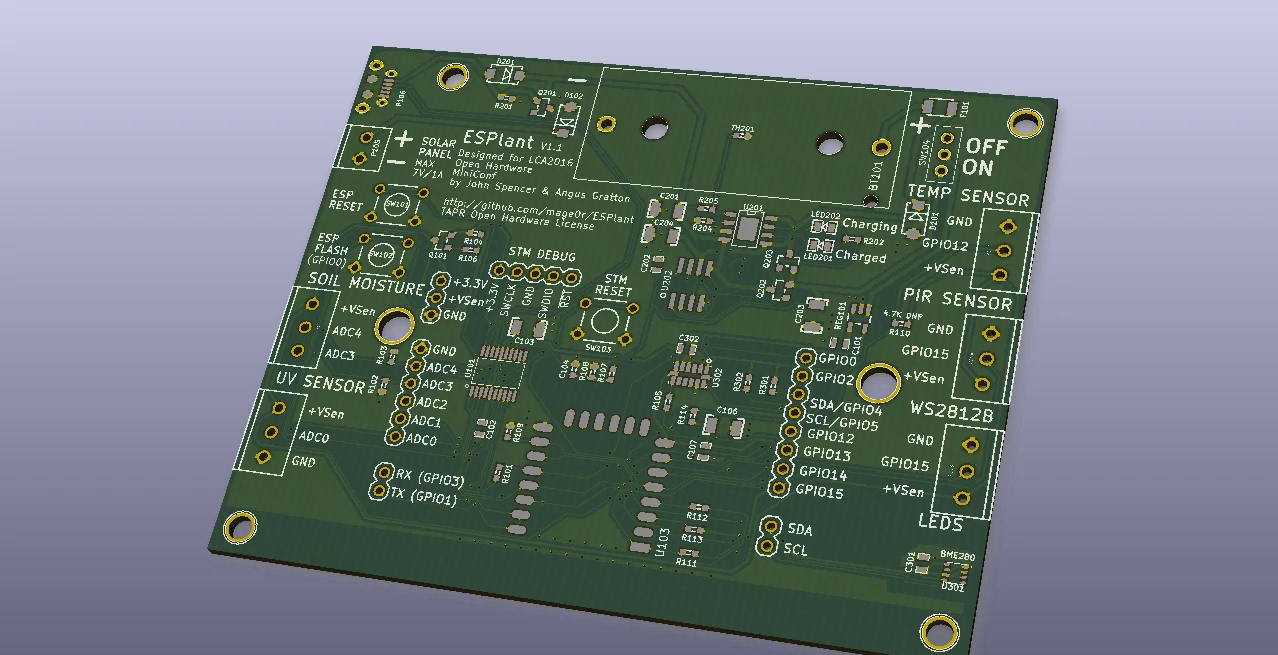
ESP8266 environmental-sensor board for the linux.conf.au Open Hardware Miniconf
linux.conf.au 2016's Open Hardware / Arduino Miniconf produced ESPlant, an ESP8266 WiFi environmental-sensor board with solar-friendly power, onboard sensors, optional external sensors, Arduino firmware, and public hardware files.
STM32F030 IR Hardware Hacking Village badge
Ruxcon 2016's Hardware Hacking Village badge is preserved as an Australian STM32F030K6T6 badge with IR receiver/emitter hardware, eight LEDs, dual CR2032 holders, assembly documentation, and a public firmware archive.
Wemos D1 Mini acrylic badge with OLED and RGB shields
BSides Perth's official 2017 badge blog records a Wemos D1 Mini conference badge with OLED shield, RGB shield, switched AA battery holder, laser-cut and etched acrylic base, Arduino IDE code, and a public GitHub repository.
Brisbane pre-registration credential with CFP speaker-badge evidence
CrikeyCon 2017 is represented by official archive evidence for Friday pre-registration badge collection plus CFP evidence that accepted presenters, trainers, and event holders received a special speaker badge.
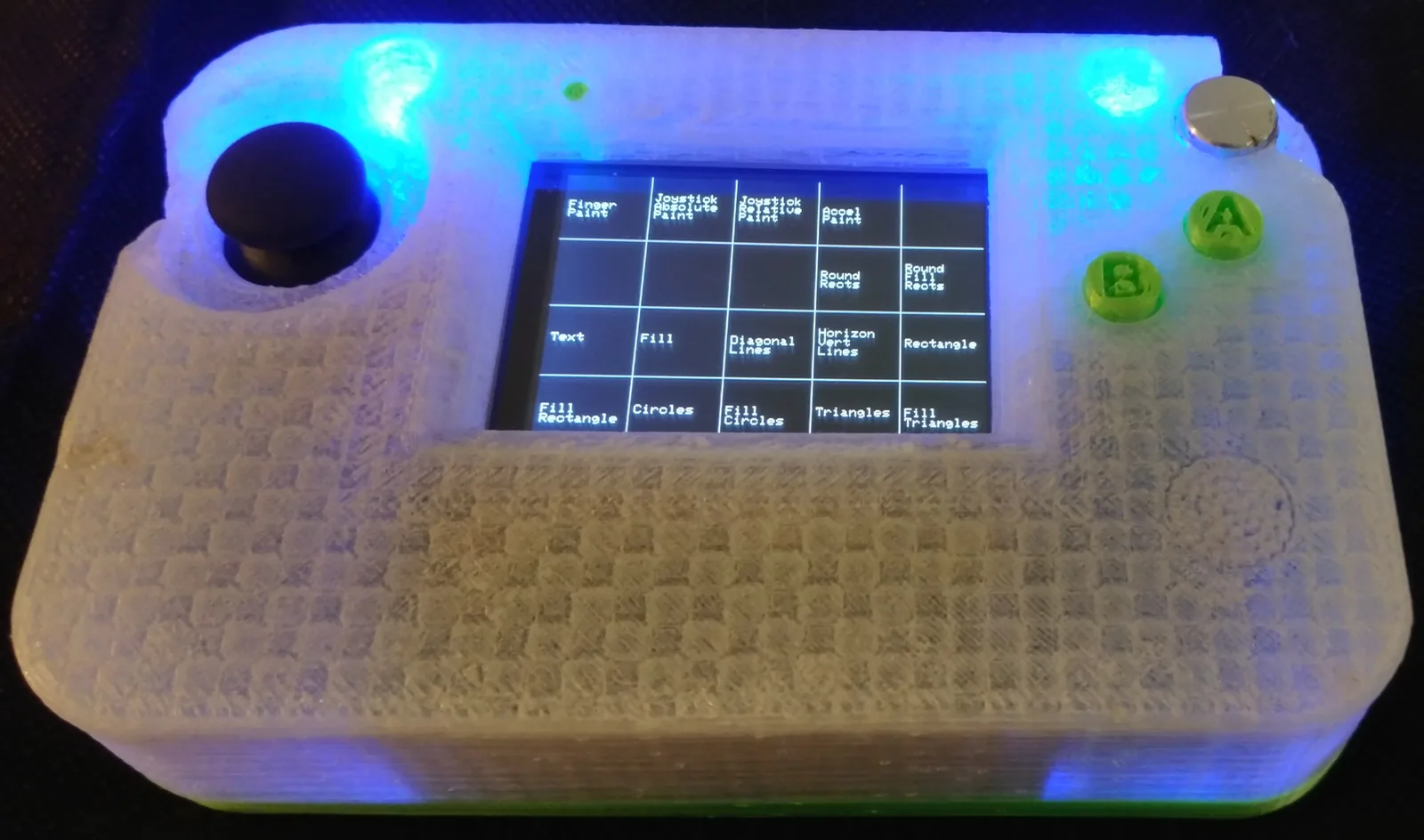
linux.conf.au Open Hardware Miniconf ESP32 badge board
linux.conf.au 2017's Open Hardware Miniconf centered on IoTuz, an ESP32-based custom board documented by the official schedule, CCHS Melbourne hardware and firmware repositories, workshop setup notes, and attendee driver work.
ESP8266 NodeMCU Hardware Hacking Village challenge badge
Ruxcon 2017's Hardware Hacking Village badge is preserved as an Australian ESP8266/NodeMCU challenge badge with official HHV schedule evidence, public firmware source, and post-event flag walkthroughs.
NodeMCU-based electronic badge and hardware-interface tool
The BUSSide was the BSides Canberra 2018 electronic badge, issued to 2,000 delegates and documented through official BUSSide pages, CSides talk notes, GitHub Pages documentation, and a public source repository.
Handmade NodeMCU ESP8266 WiFi badge with badge-hack contest context
Contemporary Australian Cyber Security Magazine coverage documents BSides Perth 2018 attendees receiving a cool, unique handmade conference badge using a NodeMCU ESP8266 WiFi SoC, with a badge-hack prize promoted before the event.
Brisbane pre-registration credential with special speaker-badge evidence
CrikeyCon V is represented by official archive evidence for Friday pre-registration badge collection plus call-for-participation benefits that promised special speaker badges to presenters, trainers, and event or workshop holders.
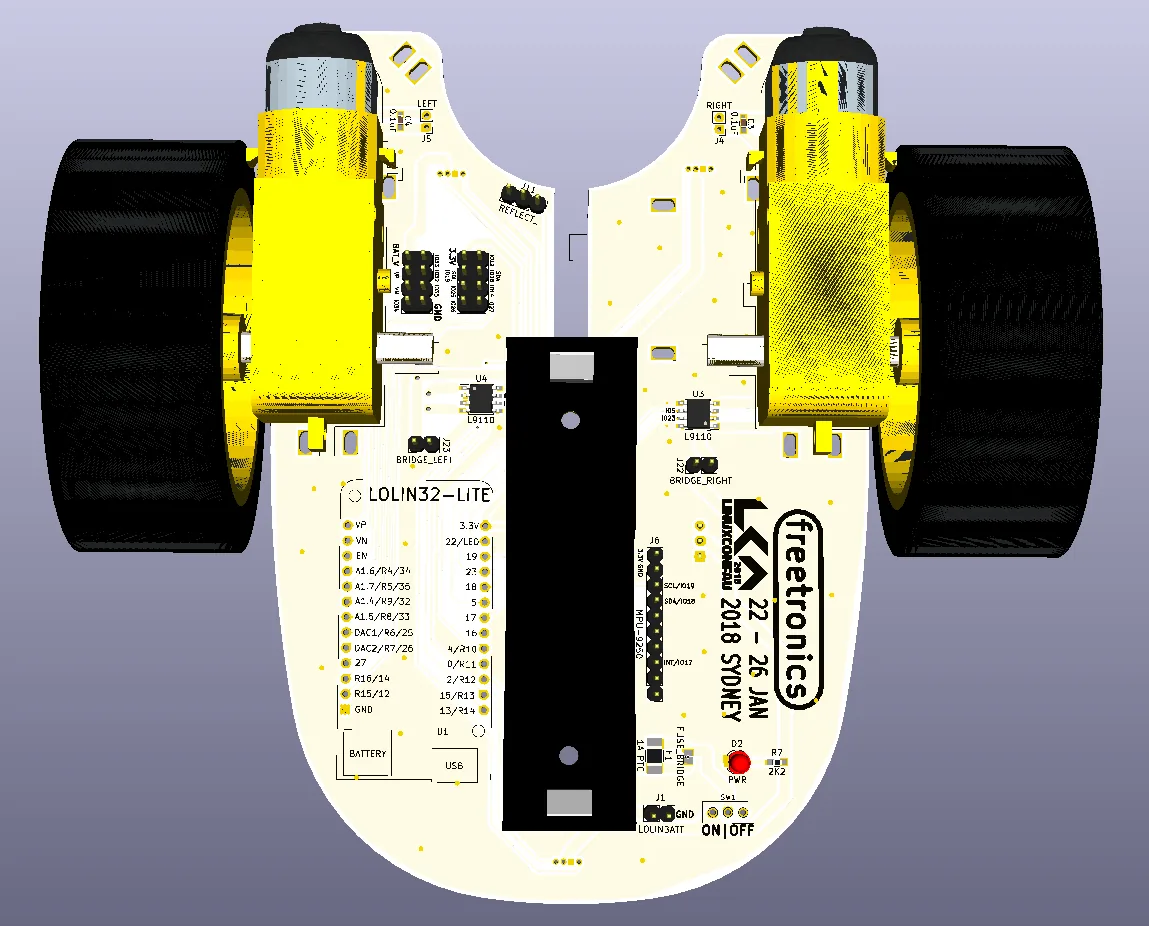
ESP32 soccer-robot kit for the linux.conf.au Open Hardware Miniconf
linux.conf.au 2018's Open Hardware Miniconf used LoliBot, an ESP32 two-wheel robot kit with MicroPython workshop material, public example software, USB serial setup, WiFi/MQTT configuration, sensors, motors, neopixels, and a front kicker servo.
Australian physical-security conference speaker credential
A first-hand MOS & BOO wrap-up documents special speaker badges for OzSecCon 2018 and shows one as a green PCB-form speaker credential, so the record is seeded as a source-backed speaker badge without broader attendee or electronics claims.
Australian electronic badge firmware and Hardware Hacking Village record
BSides Canberra 2019 is preserved as a source-backed electronic-badge record because the official ticketing page included an electronic badge, the Hardware Hacking Village page offered badge firmware reflashing and direct discussion with hardware badge makers, and the later official speaker export names the 2019 firmware line as Nopia 1337.
Brisbane attendee, staff, Friendly Bear, and speaker badge markers
CrikeyCon VI is represented by official archive evidence for attendee badge pickup plus badge-mediated event roles: event staff identified by badge, Friendly Bear volunteers visible by name badge, and accepted speakers/trainers/event holders receiving special speaker badges.
Docklands registration flow with sponsored lanyard evidence
BSides Melbourne 2020 is represented by official schedule evidence for early conference registrations plus the official sponsor page naming CyberSec People as sponsor of the BSides Melbourne 2020 lanyards.
Small self-driving car kit for the linux.conf.au Open Hardware Miniconf
linux.conf.au 2020's Open Hardware Miniconf in Gold Coast included DingoCar, a small self-driving car hardware kit and machine-learning platform assembled, driven, trained, and tested by participants.
Hybrid-year badge with SAMD21, ESP32, e-paper, LEDs, and firmware restoration flow
BSides Canberra 2021 is source-backed by the official event page, an attendee production note, public firmware repository, schematic mirror, and Mos & Boo badge-hacking writeups documenting a shipped electronic badge with SAMD21, ESP32-PICO-D4, e-paper display, LEDs, capacitive touch, and firmware reflashing workflow.
Brisbane conference badge pickup and Connect-corner helper marker
CrikeyCon VII is represented by official archive, schedule, and event-page evidence for attendee badge pickup plus a CrikeyCon Connect badge that identified people available for informal information-security career conversations.
Online linux.conf.au ESP32-era SwagBadge and DagBadge hardware programme
linux.conf.au 2021's Open Hardware Miniconf is represented by a source-backed SwagBadge and DagBadge programme: badges were built and mailed to delegates, then covered by official software, hardware, SAO, test-jig, firmware, and show-and-tell sessions.
Simple LED and SAO-header soldering badge
A CrikeyCon 8 conference badge with a documented simple LED circuit, soldering workflow, three blue 1206 LEDs, current-limiting resistors, optional coin-cell holder, and 2x3 Simple Add-On header power path.
Updated SwagBadge, FPGA SAOs, and Rockling hardware-kit trail
linux.conf.au 2022's Open Hardware Miniconf publicly documented hardware kits, an updated LCA2022 SwagBadge, two SAOs, a Rockling FPGA audio processor, Theremin and Party Button SAOs, and a hardware-design session for the OHMC2022 Rockling and Swag Badge.
ESP32-S2 colour-screen badge with touch controls, games, and hardware tools
The 2023 BSides Canberra bPod badge is source-backed by the official BSides archive, schedule material, and public GitLab repository containing KiCad hardware, firmware, updater, and server code.
Melbourne badge and lanyard credential with photo-consent and interaction-protocol markers
BSides Melbourne 2023 is represented by an official attendee-communications record proving badge and lanyard use for identity, access, photo-consent signalling, and personal interaction-protocol stickers.
First Adelaide Wombat CTF badge with MS51FB9AE, LEDs, micro-USB, and soldering village
BSides Adelaide 2024's first Wombat badge is preserved through creator-published Hackerware and Hackster sources as a full-colour UV-printed CTF hardware badge with Nuvoton MS51FB9AE controller, CH340G USB serial, RGB LED, six challenge LEDs, CR2032 power, and attendee LED soldering.
Middle-earth themed 555-timer LED soldering badge
BSides Canberra 2024's public ticketing page promised an electronic badge, and an attendee writeup describes the shipped badge as an orc-shaped soldering badge built around a 555 timer, LEDs, diode, resistor, capacitor, and 9V battery power.
Cremorne badge and lanyard credential with pronoun, photo, and interaction preference signals
BSides Melbourne 2024 is represented by the official sponsorship prospectus documenting conference badges with preferred pronouns, photo permissions, and interaction preferences plus a sold lanyard sponsorship item.
Brisbane badge-pickup credential with custom accessibility pins
CrikeyCon IX is represented by official schedule and ticketing evidence for early conference badge pickup plus an accessibility-badge station where TinkerInk helped attendees make custom pins that signalled approach preferences.
Standalone binary-entry CTF badge with tactile buttons, LEDs, and hidden hardware challenge
BSides Adelaide 2025's second Wombat badge is source-backed by Hackerware, Hackster, and attendee challenge analysis: it kept the MS51FB9AE/CR2032 LED badge line but added onboard CTF controls, seven official challenge LEDs, binary flag entry, and an unannounced hardware challenge.
Queensland ticket-included badge with electronic-badge prospectus evidence
BSides Brisbane 2025 ticketing documented a cool badge for Standard and VIP attendees, while the sponsorship prospectus offered electronic badge design and build for 500 delegates as a separate supporter item.
Attendee-assembled ESP32 DevKit / 1.8-inch TFT challenge badge
The public BSides Perth 2025 badge archive and its assembly documentation identify a physical, attendee-assembled custom-PCB artifact built around an ESP32 DOIT DevKit v1, 1.8-inch LCD TFT, four tactile buttons, headers, and Micro-USB power. The archive also documents a virtual companion and challenge context, but it was published in September-October 2025 and does not prove that every event attendee received the same physical configuration.
Tenth-anniversary Brisbane conference credential
CrikeyCon X is represented as an Australian identity-badge record because the official schedule told attendees they could pick up their badge early before Saturday entry, while the Humanitix and archive pages establish the March 22, 2025 Brisbane event context.
Post-event South Australian attendee badge and lanyard support record
BSides Adelaide 2026 is represented here as a post-event identity/lanyard badge record: the CFP, current sponsorship page, and Humanitix ticketing establish the July 27-28, 2026 Amora Hotel Adelaide edition, while the sponsor brief lists printing, lanyards, and badges as supporter-fundable event costs.
Interactive ESP32 conference badge with screen, controls, badge-to-badge comms, and SAO support
BSides Ballarat 2026's public event page documents an Underground interactive conference badge designed and produced by Firnsy at Ballarat Hackerspace, with ESP32 processing, a screen, controls, badge-to-badge communication, SAO support, and a limited BSides SAO add-on; a public maker writeup also documents a third-party WS2812B Simple Add-On for the badge. In a March 2026 post-event update, an organizer reported that the conference badge contained 20 puzzles and that its full source code had been released.
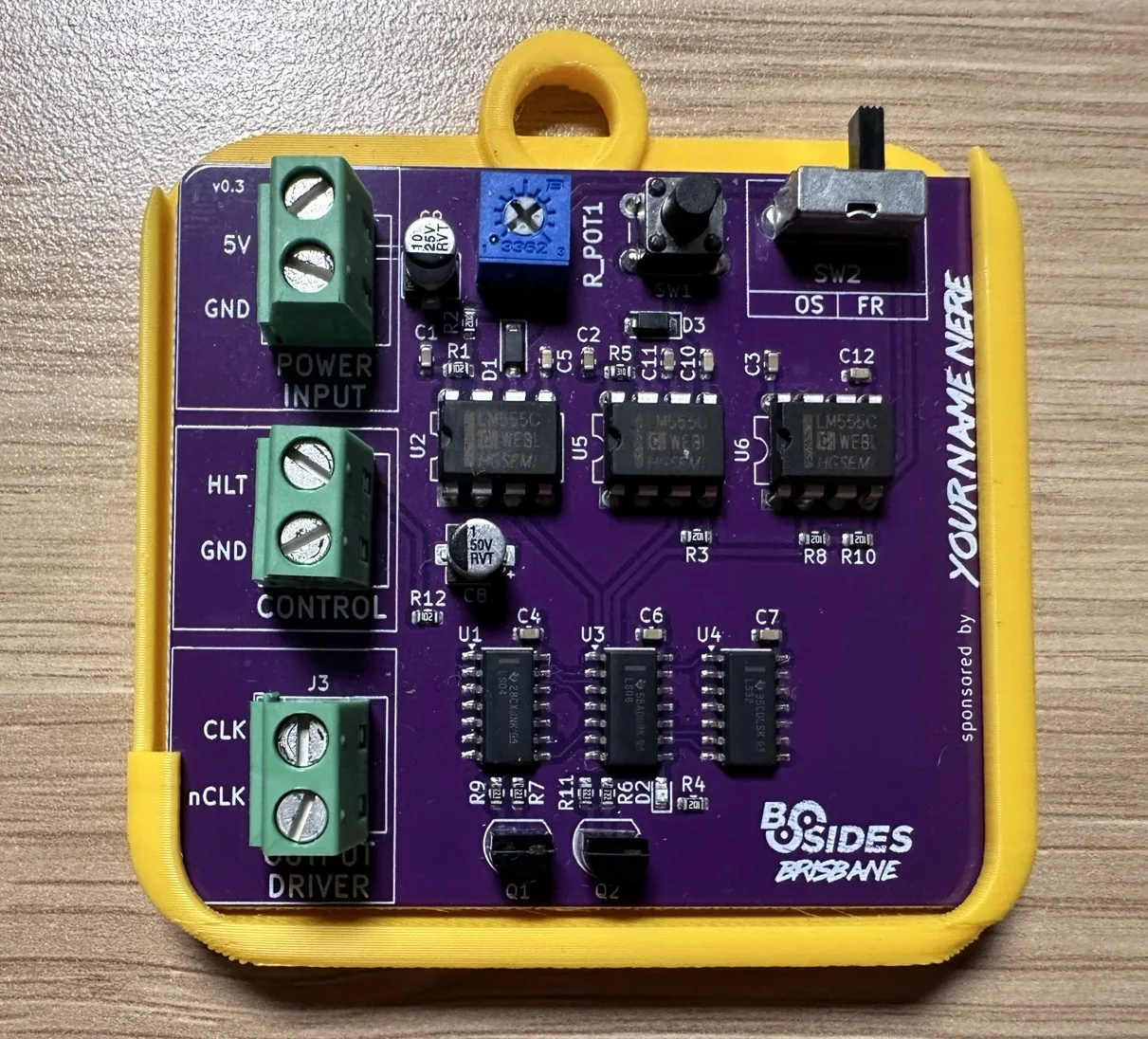
Post-event 555/74LS clock-generator badge with MIT source release
BSides Brisbane 2026's official prospectus offered electronic badge design/build for 500 delegates, Humanitix marked the July 4 event passed while listing conference-badge and VIP special-badge pickup, and public event updates named BLARGE as the electronic-badge supporter. Six days after the event, the `bsidesbrisbane/badge-2026` repository publicly documented the actual 2026 Clock Module: a photographed purple BSides Brisbane board in a 3D-printed case, a simple manually controllable clock generator made from 555 timers and 74LS-series logic, with committed Gerbers, BOM/CPL production data, an STL case file, and an MIT license.
Pre-event Canberra electronic-badge and speaker-credential record
BSides Canberra 2026 is represented as a planned/pre-event record because its public Humanitix ticketing page says general and student entry include a t-shirt and electronic badge, while the official CFP says accepted talks or events receive a speaker/event-host badge.
Cremorne participant badge and lanyard credential
BSides Melbourne 2026 is represented by the official 2026 event page and sponsorship package, which document the May 15-17 Seek HQ event and a lanyard sponsorship item whose lanyards hang participant badges and include the badge for about 600 items.
Planned Western Australian conference swag badge
BSides Perth 2026 is represented as a planned participant-badge record because the official event page says the weekend participant ticket includes conference swag: t-shirt, badge, and stickers.
Events
The May 4-5, 2013 Perth WAHCKon edition whose official ticket page documents a WAHCKon 2013 badge included with the standard ticket.
The October 24-25, 2015 Ruxcon edition in Melbourne whose public Hardware Hacking Village badge repository and build guide preserve an STM32 electronic badge with SMD assembly, CR2032 power, SWD programming, I2C errata, and firmware examples.
The April 15-16, 2016 BSides Canberra edition whose official event page anchors the Canberra Rex Hotel event context and whose contemporary Register coverage documents a home-made Arduino badge that displayed the conference running order.
The February 1-5, 2016 Geelong linux.conf.au edition whose Open Hardware / Arduino Miniconf centered on the ESPlant ESP8266 environmental-sensor board, public hardware repository, assembly context, and attendee MQTT reuse.
The October 22-23, 2016 Ruxcon edition in Melbourne whose official Hardware Hacking Village schedule and public Darkglade material preserve an STM32F030, IR, LED, CR2032, and firmware-source badge trail.
The inaugural BSides Perth edition at the University of Western Australia whose official blog and public repository document a Wemos D1 Mini, OLED, RGB shield, AA battery, acrylic-panel badge.
The February 25, 2017 Brisbane edition whose official archive documents Friday pre-registration badge collection and whose CFP documents special speaker badges.
The January 16-20, 2017 Hobart linux.conf.au edition whose Open Hardware Miniconf centered on the IoTuz ESP32 board, public KiCad hardware, firmware setup, and ESP32 software talks.
The October 21-22, 2017 Ruxcon edition in Melbourne whose official Hardware Hacking Village schedule documents the Ruxcon 2017 HHV Badge session and whose public Darkglade/GitHub trail preserves ESP8266/NodeMCU badge firmware and flag walkthroughs.
The Australian BSides Canberra edition whose public BUSSide and CSides source trail documents an electronic badge issued to 2,000 delegates and later developed into an ESP8266 hardware-interface tool.
The September 15-16, 2018 BSides Perth edition whose contemporary coverage documents redesigned handmade conference badges using a NodeMCU ESP8266 WiFi SoC and a badge-hack prize.
The February 24, 2018 fifth CrikeyCon edition whose official archive documents Friday pre-registration badge collection and special speaker badges for presenters, trainers, and event/workshop holders.
The January 2018 Sydney linux.conf.au edition whose Open Hardware Miniconf had participants building LoliBot ESP32 robot kits and adjacent MicroPython, FPGA, Tomu, and protocol-analysis hardware sessions.
The 2018 Australian physical-security conference edition whose first-hand MOS & BOO wrap-up documents special OzSecCon speaker badges and shows the artifact as a green PCB-form speaker credential.
The Australian BSides Canberra edition whose ticketing page included an electronic badge, whose Hardware Hacking Village page documents badge firmware reflashing, and whose later speaker-export trail identifies the 2019 badge firmware as Nopia 1337.
The April 6-7, 2019 sixth CrikeyCon edition whose official archive documents pre-registration, Friendly Bear name badges, event-staff badges, and special speaker badges.
The March 13-15, 2020 BSides Melbourne edition whose official schedule documents early and Saturday registration while the official sponsor page documents BSides Melbourne 2020 lanyards.
The January 13-17, 2020 Gold Coast linux.conf.au edition whose Open Hardware Miniconf included an assembly workshop, DingoCar machine-learning and perception sessions, and small-scale self-driving car experimentation.
The April 9-10, 2021 BSides Canberra edition whose public source trail documents a community-delivered electronic badge with SAMD21, ESP32, e-paper display, LEDs, firmware binaries, and badge-hacking writeups.
The March 6, 2021 seventh CrikeyCon edition whose official archive, schedule, and events pages document conference badge pickup plus a CrikeyCon Connect badge used to identify mentoring/connect-corner helpers.
The January 23-25, 2021 linux.conf.au online edition whose Open Hardware Miniconf centered on the LCA2021 SwagBadge and DagBadge, with hardware, firmware, SAO, testing, and show-and-tell sessions.
The CrikeyCon 8 edition whose public badge page documents a simple LED badge circuit, coin-cell or SAO-header power, and soldering instructions.
The January 14-16, 2022 linux.conf.au online edition whose Open Hardware Miniconf offered hardware kits, an updated SwagBadge, FPGA SAOs, and Rockling-related badge hardware talks.
The September 28-30, 2023 BSides Canberra edition whose official archive links the bPod badge repository and whose schedule includes the Introducing the new bPod talk.
The 2023 BSides Melbourne edition whose official attendee communications and schedules document check-in, lanyards, badge interaction-protocol stickers, photo-consent lanyard colors, badge-based afterparty access, CTF, lockpick village, and keyboard soldering workshop context.
The inaugural BSides Adelaide edition held May 17-18, 2024, whose Hackerware/Hackster source trail documents the first Wombat CTF hardware badge and soldering-village workflow.
The September 26-28, 2024 BSides Canberra edition whose official event page and ticketing source document an electronic badge, with attendee evidence describing a soldered 555-timer orc blinky badge.
The November 15-17, 2024 BSides Melbourne edition whose official sponsorship prospectus documents badges carrying preferred-pronoun, photo-permission, and interaction-preference signals plus a sold lanyard sponsorship item.
The May 18, 2024 ninth CrikeyCon edition in Brisbane whose official schedule documents early badge pickup and whose ticketing page documents TinkerInk accessibility badge/pin creation for approach-preference signalling.
The May 12-13, 2025 BSides Adelaide edition whose public Hackerware, Hackster, and attendee writeup sources document the second Wombat CTF badge with onboard binary-entry buttons and a secret hardware challenge.
The July 12, 2025 Queensland hacker conference edition whose Humanitix ticketing page documents cool badge inclusion for standard and VIP tickets and whose prospectus offered electronic badge design/build for 500 delegates.
The October 18-19, 2025 BSides Perth edition whose public event ticketing and commit-pinned badge archive document an attendee-assembled ESP32 DevKit / 1.8-inch TFT challenge badge without establishing attendee-wide allocation or a deployed final revision.
The March 22, 2025 tenth CrikeyCon edition in Brisbane whose official schedule and ticketing trail document conference badge pickup and attendee access context.
The July 27-28, 2026 third BSides Adelaide edition at Amora Hotel Adelaide, previously Hilton Adelaide, is complete; CFP, Humanitix, and sponsorship material anchor the event context while the sponsor brief documents printing, lanyards, and badges as attendee-support expenses.
The February 28-March 1, 2026 regional Victorian BSides edition whose public event page documents the Underground interactive ESP32 conference badge, SAO support, and limited BSides SAO add-on.
The July 4, 2026 Queensland BSides edition whose public prospectus and ticketing pages document conference badges, a VIP special badge tier, and electronic badge design/build for 500 delegates; post-event social updates confirm check-in badge pickup and BLARGE electronic-badge support.
The planned September 24-26, 2026 BSides Canberra edition whose public ticketing page documents electronic attendee-badge inclusion and whose official CFP documents a speaker/event-host badge for accepted talks or events. A September 27 recheck after the fully elapsed dates found the CFP page still in pre-event wording and the ticketing page still not resolving, a September 28 recheck received an explicit HTTP 404 from that ticketing URL, and September 29 and 30 rechecks found the official homepage still advertising tickets for the 24-26th September 2026 dates, so the edition is not yet marked completed and badge handoff stays unverified.
The May 15-17, 2026 BSides Melbourne edition whose official home page documents training and conference dates at Seek HQ and whose sponsorship package documents a lanyard item that includes participant badges.
The planned November 13-14, 2026 BSides Perth edition whose official event page lists conference swag including a t-shirt, badge, and stickers for participant tickets.
Lifecycle
The event offered an exclusive BSides SAO add-on with ticket purchase, with proceeds supporting Ballarat Hackerspace.
The LCA2022 Open Hardware Miniconf page described an FPGA SAO usable standalone or plugged into compatible electronic conference badges, including LCA2021 SwagBadge combinations.
The LCA2021 hardware session and miniconf page covered the Simple Add-On standard, SAO protoboards, Tux SAO, and extension options for badge life.
The official LCA2022 Rockling session documented the Rockling FPGA audio processor as part of the hardware kit and SAO talk track.
The official LCA2022 SAO session described two shipped SAOs in the hardware kit, including Theremin and Party Button add-ons.
The assembly documentation directs builders to consult a BSides Perth team member at assembly stations before soldering. It supports an on-site assembly context but does not establish how many badges were offered or who received one.
The attendee guide told delegates they could choose their own interaction protocols using a badge sticker, making the credential part of the event's interpersonal-boundary signalling.
The Humanitix page says TinkerInk brought a badge press so attendees could make custom pins signalling whether they wanted to be approached or left alone.
The CrikeyCon Connect section told attendees to look for the CrikeyCon Connect badge when seeking informal information-security career conversations.
The conduct/support section says Friendly Bear volunteers could be identified by the Friendly Bear text on their name badge.
The first flag path used UART-visible boot/output behavior and per-badge material documented in the Darkglade EasyFlag writeup.
The hard flag path involved firmware inspection, Lua crypto module behavior, AES routines, and badge-specific challenge material.
The Wombat-2 CTF presented seven official puzzles; each successful binary flag lit the matching progress LED on the badge.
The 2024 badge used micro-USB CTF interaction, correct flags, persistent progress, and LED animations to show unlocked challenge state.
The badge challenge centers on encrypted logs, hidden communications, coordinates, and a rogue underground bitcoin-mining operation stealing power from local businesses.
The firmware and server trees preserve snake and tetris apps, score-token generation, online scoreboard tables, and bPodUpdater/server packaging.
Pre-event coverage told attendees there would be a prize for the best badge hack, framing the badge as a hackable participant artifact.
The 2025 badge replaced USB-dependent input with onboard CTF, 1, and 0 tactile buttons for entering ten-bit challenge flags directly on the badge.
The badge displayed the conference running order, making the 2016 badge a practical attendee schedule surface.
The LCA2021 Open Hardware Miniconf page said attendees who missed out on a SwagBadge could order components and make a DagBadge from scratch.
The project README documents a virtual companion and online-challenge context. The catalogue records that high-level relationship without reproducing service details, credentials, operational endpoints, or challenge solutions.
BSides Brisbane's event-day public update said check-in was open and told attendees to grab their badge and shirt before the opening. It establishes pickup flow, not a per-unit Clock Module handoff ledger.
The event page says ticket and sponsorship revenue is reinvested into venue, food, swag, and participant experience, giving the badge a documented role in the participant bundle.
The CFP, current sponsor page, and Humanitix listing identify the July 27-28, 2026 Amora/Hilton Adelaide event as the third BSides Adelaide and anchor CTF, village, hardware, embedded, IoT, and RF topic context without making badge-implementation claims.
The same first-hand wrap-up frames OzSecCon as a Melbourne physical-security conference with locksport, tamper-evident bypass, and key-impressioning activity.
The overview records add-on-pack paths for an Arduino MKRZero header, IR transceiver, audio codec, IMU, external flash, and PSRAM.
The firmware tree includes apps for schedule, WiFi scan, I2C detect, I2C/SPI sniffing, UART terminal, GPIO, MCP23S17/MCP23017 tooling, LEDs, brightness, QR, text, and diagram viewing.
The public repository preserves blinky, I2C test, SSD1306 display, low-power display, interrupt display, and threatbutt_IoT firmware example directories.
The LCA2021 software session documented the Aiko framework on top of MicroPython as a badge customization and service layer.
The official 2023 speaker export says Peter Rankin developed BSides Canberra badge firmware including the 2019 Nopia 1337.
The reflashing guide documents Python dependencies, ESP BOOT / ESP EN flashing mode, SAMD reset programming mode, USB-port behavior, and restoration of the original firmware bundle.
The official blog points to a public GitHub repository preserving the Arduino IDE sketch and display-support files for the 2017 badge.
Darkglade's writeups and source-release post identify the badge firmware as NodeMCU/Lua on ESP8266 and preserve a public code archive after the event.
The public repository preserves badge firmware and a fork of Arduino-IRRemote with the RuxBadge protocol, described as a modified Panasonic protocol with an extended address field and timing tweaks.
The programming writeup documents compiling badge demos and flashing STM32 firmware through OpenOCD with a patched Bus Pirate SWD setup.
The firmware repository and workshop wiki document ESP-IDF setup, WiFi and MQTT configuration, build/flash commands, serial monitoring, and MQTT output checks for IoTuz.
The CCHS software guide covers CH340 serial access, esptool.py flashing, MicroPython firmware installation, ampy/rshell workflows, application install scripts, and REPL interaction.
The public docs use the Arduino IDE, NodeMCU 1.0 board support, 160MHz setting, and espsoftwareserial library before uploading the BUSSide firmware.
The build sheet documents JP1 boot-position behavior, with LOAD for normal flash boot and NORM activating the UART-based bootloader despite reversed board markings.
The reviewed snapshot preserves KiCad PCB/schematic material and Arduino-style physical-badge source. Its post-event publication does not prove an exact deployed revision or source-to-device mapping.
The attendee writeup describes the 2024 badge as an orc-shaped electronic badge using a 555 timer, LEDs, diode, resistor, capacitor, and 9V battery power.
The public component list names an ESP32 DOIT DevKit v1 30-pin module, 1.8-inch LCD TFT, four tactile buttons, resistors, and headers on a dedicated badge project board.
The hardware README frames IoTuz as a custom linux.conf.au 2017 Open Hardware board built around the then-new ESP32 with WiFi, Bluetooth, and dual-core CPU capability.
The bPod repository and update page document an ESP32-S2 badge with ST7735 colour screen, capacitive touch controls, USB-C, LEDs, SAO connector, flash, and PSRAM-related hardware files.
The repository documents ESPlant as an ESP8266 WiFi kit for transmitting environmental data, with Arduino IDE, Espressif SDK, and esp-open-rtos programming paths.
Contemporary coverage says BSides Canberra 2016 delegates received a home-made Arduino badge, but does not identify exact board revision, display model, or production files.
Freetronics documents LoliBot as a two-wheel robot kit with a Lolin32-Lite ESP32 brain, WiFi/Bluetooth, onboard 18650 power, USB charging, and skid-steering drive.
The 2024 Wombat badge combined a custom PCB, MS51FB9AE Nuvoton microcontroller, CH340G USB serial, micro-USB, RGB LED, six challenge LEDs, CR2032 holder, and slide switch.
Australian Cyber Security Magazine reported that 2018 delegates received a handmade conference badge using a NodeMCU ESP8266 WiFi SoC.
The technical overview identifies an ATSAMD21G18A, ESP32-PICO-D4, LP5024 LED driver, 2.9 inch red/black/white e-paper display, capacitive touch, user LEDs, RGB LEDs, microSD, and user buttons.
The BSides Ballarat page documents an interactive ESP32 badge with screen, controls, badge-to-badge communication, and SAO add-on support.
The 2017 badge combined a Wemos D1 Mini with OLED and RGB shields plus a switched AA battery holder on a laser-cut acrylic base.
The documented 555/74LS design can free-run at an adjustable rate, single-step with a debounced button, or halt via an external HLT input; an SPDT switch selects the free-running or one-shot path.
Creator and attendee writeups document a hidden challenge beneath the published CTF path, with PCB inspection and extra LED behavior rewarding hardware probing.
The workshop guide documents optional bodge wires for the mislabeled I2C bus and switch-tab trimming to avoid shorted contacts.
The CrikeyCon 8 badge could be built with coin-cell power, 2x3 SAO-header power, three LEDs, resistors, and optional normal or reverse LED mounting.
The official HHV page required attendees to bring a 3.3V USB-UART adapter, and the EasyFlag writeup shows UART boot output used to interact with the badge challenge.
The documented discrete 2N7000 output stage provides normal CLK and inverted nCLK outputs for slow digital-logic or teaching experiments, with an LED pulse indication.
The 2026 prospectus offers an Electronic Badge item covering electronic badge design and build for 500 delegates, and BSides Brisbane's public update thanks BLARGE for the electronic badge. The prospectus is not a final recipient or assembly ledger.
The repository preserves KiCad schematic/PCB/project files plus PCBWay render, BOM, placement, Gerber/drill, flashing binary, and flashing instruction artifacts.
The BUSSide was developed to detect I2C, SPI, UART, and JTAG pinouts, dump I2C EEPROMs and SPI flash, and auto-detect UART settings for an interactive console.
Official attendee communications say black lanyards meant photos were allowed while blue lanyards meant the wearer did not want photos or video taken.
The official 2024 prospectus says BSides Melbourne badges carry preferred pronouns, photo permissions, and interaction preferences.
The sponsor brief lists printing, lanyards, and badges among supporter-fundable expenses for the 2026 event.
The official WAHCKon 2013 ticket page says the standard ticket included a WAHCKon 2013 badge.
Humanitix ticketing lists standard conference badge inclusion and a limited VIP Edition with a special VIP badge, and the page now marks the event passed. The sources do not map the VIP tier to a different Clock Module configuration.
The official schedule told attendees they could walk in at doors-open, grab their badge, and collect coffee from a sponsor.
The official schedule told attendees to pick up their badge during Friday preregistration to make Saturday morning registration easier.
The official 2020 schedule lists Friday early conference registrations from 4pm to 6pm and Saturday registrations opening at 8am.
The events page says Friday pre-registration at Events on Oxlade let attendees collect their badge early and meet attendees, speakers, and crew.
The official CrikeyCon V archive told attendees to collect their badge early at the Friday welcome event while meeting attendees, speakers, and crew.
The official CrikeyCon 2017 schedule told attendees they could pre-register, collect their badge, and meet delegates before the conference.
The official archive documented pre-registration as a chance to collect the CrikeyCon VI badge early before the conference.
The CrikeyCon X schedule told attendees to pick up badges early at the Friday pre-registration event so they could enter the Saturday conference faster.
The MOS & BOO wrap-up says their talk made them VIPs and gave them special speaker badges at OzSecCon 2018.
The official 2026 sponsorship package says lanyards allow participants to hang badges around their necks and that the lanyard package includes the badge for about 600 items.
The official sponsor page names CyberSec People as sponsor of the BSides Melbourne 2020 lanyards.
The official 2024 prospectus lists lanyard sponsorship as sold and sponsored in the conference-items sponsorship inventory.
Participants trained the cars' neural networks by manually driving around the track before testing autonomous driving behavior.
The software guide documents WiFi credential setup, RGB LED boot status, MQTT host configuration, and serial-console checks for networked LoliBot behavior.
The sponsorship pack offered an Electronic Badge item covering electronic badge design and build for 500 delegates.
A March 24 post-event update by Dr Paul Black says the conference badge had 20 puzzles to solve and that full source code was released. The post directs readers through a short link whose final archive target was not independently recovered in this pass.
Marc Merlin's writeup and repository document Arduino-environment support for many IoTuz peripherals, demo code, calibration work, and board bring-up fixes.
Repository sketches include production-test, serial-sensor, and MQTT sensor firmware; Marc Merlin's writeup adds a participant LED-strip blinky reuse trail.
The bsidesbrisbane/badge-2026 repository documents the badge as a manually controllable 555/74LS clock module and publishes Gerbers, BOM/CPL data, a case STL, and an actual board photo after the event.
ESPlant included a 16340 lithium-cell holder, solar-input-friendly charger interface, and automatic switching between solar input, battery, and USB power.
The attendee report quotes Penten crediting volunteers, global parts-shortage effort, GME and 4Design support, and Sydney manufacture for delivering the badge to the community.
Marc Merlin's first-hand report identifies the 2020 DingoCar as controlled by a Raspberry Pi and shows it as the hardware focus of the Open Hardware Miniconf.
The board exposed BME280 and ADXL345 I2C sensors, screw-terminal ADC inputs for soil moisture, DS18B20, PIR, WS2812B LED strip support, and a switchable VSens rail.
The attendee report says the badge was simple enough for beginners to get going and was soldered during the conference with shared attendee setup help.
The official CFP says accepted talks or events receive a speaker/event-host badge granting free access to BSides Canberra.
The participation-call sections promised accepted speakers, trainers, and event/workshop holders a special speaker badge in addition to the regular attendee badge.
The CrikeyCon V call-for-presentations, training, and events/workshops sections each promised accepted participants a special speaker badge.
The CrikeyCon 2017 CFP promised accepted presenters, trainers, and event holders a special speaker badge.
The current 2026 sponsor page marks lanyards as sponsorship claimed in the conference-items inventory.
An onboard STM32F042 acted as USB/serial interface and I2C ADC bridge, with ESP_Kwai library support and STM firmware material in the repository.
A maker writeup documents a simple BSides Ballarat 2026 SAO board with a six-pin pass-through connector and a WS2812B addressable RGB LED driven from pin 5.
Humanitix described the conference badge as an electronic badge worthy of the Fellowship within the event's Middle-earth themed ticketing copy.
The official BSides Perth 2026 page says the weekend participant ticket includes conference swag made up of a t-shirt, badge, and stickers.
Humanitix says BSides Canberra 2026 general and student entry include a t-shirt and electronic badge, but no shipped hardware details are public yet.
The Humanitix ticketing page lists a cool badge with Standard Ticket access and again as part of the VIP Edition inclusions.
The official schedule lists Open Hardware assembly time plus DingoCar machine-learning and visual-perception sessions in Room 8.
The build PDF walks attendees through fluxing pads, placing the STM32 processor, reflowing LEDs, resistors, capacitors, and installing the CR2032 holder.
The RuxBadge instruction sheet documents two-sided SMD assembly around an STM32F030K6T6, IR receiver/emitter, eight green LEDs, passives, headers, jumper, and dual CR2032 holders.
The tutorial documents neopixels, motor H-bridges, reflection sensor input, exposed headers, and a kicker servo, with exercises for lights, wheels, servo motion, sensor detection, and touch inputs.
The SimpleSolder guide sent attendees who completed the beginner LED flasher toward the more advanced and useful Ruxcon 2016 Hardware Hacking Village badge.
The official Tuesday schedule lists a kit assembly session before the ESP32, IoTuz hardware, ESP-IDF, MicroPython, and IoTuz demo talks.
The Hardware Hacking Village offered badge firmware reflashing opportunities and discussions with the hardware badge makers.
Attendees personalized the badge at the conference by soldering their own 1206 SMD challenge LEDs with hardware-village support.
Operational history
The catalogue ties the badge to the Hardware Hacking Village public archive and avoids claiming exact distribution volume or universal attendee issuance.
The catalogue cites the firmware and writeups while avoiding copied board artwork, undocumented image reuse, or claims of complete open hardware release.
The record avoids treating documentation images, pin locations, or layout details as universal across all BUSSide boards.
The catalogue uses it to prove badge behavior and puzzle surfaces while avoiding full challenge-solution reproduction in the main badge summary.
The catalogue uses them to prove badge behavior and firmware surfaces while avoiding full solution reproduction in the main badge summary.
The record does not claim processor, display, radio, CTF, battery, or shipped electronic features beyond the public sources.
The entry describes the public conference-badge programme and keeps component-level claims limited to sourced high-level evidence.
The entry captures the event-backed kit and badge lineage while avoiding unsupported chip-part, board-revision, firmware, or shipped-behavior claims.
The catalogue records the verified electronic-badge behavior while avoiding unsupported claims about circuit design, parts, firmware, or challenge features.
The record keeps component claims to ESP8266/NodeMCU evidence and avoids unsupported board-layout or production-run detail.
The record keeps hardware claims to the build PDF and repository README instead of inventing board-layout, distribution-volume, or licensing detail.
The catalogue keeps the record to registration and lanyard evidence until direct badge documentation appears.
The catalogue keeps the record to badge/lanyard identity and preference-marker behavior until direct badge documentation appears.
The catalogue records the verified orc blinky badge without inventing chip pinouts, LED counts, exact component values, board revisions, or source-code claims.
The catalogue keeps the record to the proved participant badge/lanyard claim until direct badge documentation or a rights-cleared original photo appears.
The catalogue keeps the record to badge pickup, staff/support identification, and speaker-credential evidence until direct badge documentation appears.
The catalogue keeps the record to badge/lanyard identity, access, photo-consent, and interaction-protocol behavior until direct badge documentation appears.
The catalogue keeps the record to badge pickup and Connect-helper signalling until direct badge documentation appears.
The entry is now separated from the 2018 BUSSide record and keeps 2019 claims limited to what the official pages prove.
The catalogue keeps the record to badge pickup and identity use until direct badge documentation appears.
The catalogue models the artifact as a planned identity/swag badge and avoids upgrading it into an electronic badge.
The catalogue keeps the record to badge pickup and accessibility-pin signalling until direct badge documentation appears.
The record is deliberately limited to printing, lanyard, badge support, and event-ticketing evidence until official post-event photos, production notes, or technical archives appear.
The catalogue records only the proved speaker-badge artifact and visible PCB-form context until direct technical documentation appears.
The catalogue keeps the record to badge pickup and speaker-credential evidence until direct badge documentation appears.
The catalogue does not infer microcontrollers, displays, batteries, radios, add-on connectors, games, or firmware behavior until those details are published.
The catalogue keeps the entry to the proved badge-inclusion claim until direct artifact documentation appears.
The catalogue keeps the record to badge pickup and speaker-credential evidence until direct badge documentation appears.
The catalogue tracks the attendee badge/lanyard surface while keeping hardware, firmware, artwork, challenge behavior, and distribution claims open until post-event technical recovery appears.
The entry is intentionally modeled as a lanyard and registration identity artifact so the Melbourne lineage expands without inventing PCB, firmware, RF, display, CTF, or programmable behavior.
The entry is intentionally modeled as a social-signal identity artifact so the Melbourne lineage expands without inventing PCB, firmware, RF, display, CTF, or programmable behavior.
The catalogue keeps the Melbourne lineage current while avoiding claims about final production, design, electronics, firmware, or attendee field use beyond the public badge/lanyard source trail.
The entry is intentionally modeled as conference identity, support, and speaker credentials so the CrikeyCon lineage expands without inventing PCB, firmware, RF, CTF, display, or programmable behavior.
The entry is intentionally modeled as a conference identity artifact so the Melbourne lineage expands without inventing PCB, firmware, RF, display, CTF, or programmable behavior.
The entry is intentionally modeled as a conference identity and support-signal artifact so the CrikeyCon lineage expands without inventing PCB, firmware, RF, CTF, display, or programmable behavior.
The entry is intentionally modeled as a conference identity artifact so the CrikeyCon lineage expands without inventing PCB, firmware, RF, CTF, or display claims.
The entry is intentionally modeled as a conference identity and accessibility artifact so the CrikeyCon lineage expands without inventing PCB, firmware, RF, CTF, display, or programmable behavior.
The record is modeled as a speaker credential and avoids claiming all OzSecCon attendees received this artifact.
The entry is intentionally modeled as a conference identity and speaker credential so the CrikeyCon lineage expands without inventing PCB, firmware, RF, CTF, display, or programmable behavior.
The record is modeled as an identity artifact and avoids unsupported PCB, firmware, RF, display, NFC, or challenge claims.
The entry is intentionally modeled as a conference identity and speaker credential so the CrikeyCon lineage expands without inventing PCB, firmware, RF, CTF, display, or programmable behavior.
The badge page now has a factual, rights-cleared documentary source photo without using a generated visual, sponsor-page graphic, social-media copy, or approximate reconstruction.
The public badge page, image archive, and API now point at an exact upstream LoliBot render with source URL, license, attribution, and processing notes preserved instead of generated or placeholder imagery.
The public badge page, image archive, and API now point at a real upstream IoTuz photo with source URL, license, attribution, and processing notes preserved.
The Australian entry now has a real upstream assembly photo with source URL, license, attribution, and processing notes instead of a generated or placeholder image.
The public badge page, image archive, and API now point at a real upstream ESPlant render with source URL, license, attribution, and processing notes preserved.
The entry is modeled as an LCA hardware-kit artifact in the badge lineage while avoiding claims about attendee identity-badge issuance.
The entry is modeled as a conference hardware kit in the linux.conf.au badgelife lineage rather than an attendee identity badge.
The entry is modeled as a conference hardware kit in the linux.conf.au badgelife lineage rather than an attendee identity badge.
The 2018 entry cites this only as broader Perth lineage context and does not treat it as direct 2018 behavior proof.
The record remains image-free rather than copying conference images, speaker photos, newsletter imagery, or generated art.
The record remains source-backed and image-free rather than copying conference media, social photos, or generated badge art.
The record remains source-backed and image-free rather than copying conference media, sponsor-page imagery, screenshots, or generated badge art.
The record remains source-backed and image-free rather than copying attendee photos, thumbnails, screenshots, or generated imagery.
The record stays source-backed and image-free rather than copying attendee photos, ticketing graphics, or using generated badge art.
The record stays image-free rather than using sponsor-page imagery, screenshots, placeholders, or generated badge art.
The record remains source-backed and image-free rather than copying event imagery, icon placeholders, social photos, or generated badge art.
The 2018 BUSSide record stays source-backed and image-free rather than copying documentation screenshots or board photos without complete provenance.
The record remains source-backed and image-free rather than copying conference media, social photos, or using generated badge art.
The 2018 Perth entry remains source-backed and image-free rather than copying conference or magazine imagery.
The record stays image-free rather than copying event imagery, talk thumbnails, or generated badge art.
The record remains source-backed and image-free rather than copying event imagery, social photos, or generated badge art.
The entry stays source-backed and image-free rather than copying project photos, event gallery images, or using generated artwork.
The badge record publishes without imagery rather than presenting a generated or incorrectly matched board image.
The entry stays source-backed and image-free rather than copying repository renders, event screenshots, or attendee photos without complete image provenance.
The entry intentionally uses no hero image until an original licensed badge photo is sourced.
The entry remains text-and-source only until a licensed original photo or upstream raster render is selected and documented.
The entry stays source-backed and image-free rather than copying site imagery or using a generated approximation.
The record remains source-backed and image-free rather than copying ticketing banners, event graphics, or social photos.
The pre-event participant-badge record stays image-free rather than using logo art, ticketing images, placeholders, or generated badge art.
The record remains source-backed and image-free rather than copying article imagery, event-page assets, screenshots, or generated badge art.
The entry stays source-backed and image-free rather than copying blog photos, event images, screenshots, or generated approximations.
The record remains source-backed and image-free rather than copying ticketing banners, event graphics, or social photos.
The record remains source-backed and image-free rather than copying attendee photos, technical screenshots, social-media images, or generated badge art.
The record remains image-free rather than using logo art, sponsor-brief graphics, placeholders, or generated badge art.
The physical badge remains source-backed and image-free rather than copying repository renders, build images, event media, screenshots, or a generated approximation.
The entry remains image-free rather than copying ticketing banners, prospectus graphics, or using generated imagery.
The record remains source-backed and image-free rather than copying a blog photo or using generated badge art.
The entry stays source-backed and image-free rather than copying PDF photos, event images, screenshots, or generated approximations.
The record remains source-backed and image-free rather than copying event imagery, icon placeholders, social photos, or generated badge art.
The pre-event record stays image-free rather than using ticketing graphics, screenshots, placeholders, or generated badge art.
The record remains source-backed and image-free rather than using generated art or uncleared event imagery.
The entry remains image-free rather than copying conference-page imagery or publishing generated badge art.
The record remains source-backed and image-free rather than copying event imagery, icon placeholders, social photos, or generated badge art.
The catalogue can document the verified discrete clock module while avoiding claims about universal deployment, event-day source availability, firmware, radio, or an exact recipient ledger.
The catalogue can track the upcoming Canberra lineage while avoiding claims about final badge hardware, firmware, production, or attendee delivery.
The catalogue can track the upcoming Perth badge without claiming final manufacturing, distribution, electronics, or challenge behavior.
The record keeps component claims to the published NodeMCU ESP8266 detail and avoids assigning unverified display, battery, schedule, or CTF features.
The dossier records verified hardware/software behavior and image provenance while avoiding unsupported production-run or board-revision claims.
The record combines corroborating event and hardware evidence without converting sponsor wording, later source publication, or one photo into a universal fulfillment or configuration claim.
The catalogue treats the electronic-badge wording as planning/prospectus evidence unless a final organizer post, repository, or attendee technical writeup is recovered.
The record preserves documented hardware and archive context without converting a public project tree into universal attendee distribution or a verified final release.
The catalogue may link to the public technical archive as evidence but does not publish its imagery, copy source files, or infer a reusable license from public availability.
The catalogue can cite the repository as evidence while keeping image publication and license-sensitive reuse conservative.
The catalogue can cite the repository as evidence while avoiding image or source reuse beyond attribution and linking.
The dossier records verified features and source locations while avoiding unsupported production-run or image-provenance claims.
The badge dossier cites public hardware and software archives while avoiding unsupported production-run claims.
The entry stays conservative and keeps the official event page as event context while treating the Arduino and running-order claims as secondary-source technical evidence.
The dossier records the verified badge behavior while avoiding unsupported pinout, firmware, protocol, or source-release claims.
The record keeps the hardware and software claims to creator and attendee documentation instead of inferring a full implementation.
The record captures the post-event challenge and stated-release evidence while avoiding unsupported chip pinout, firmware, radio, protocol, software-license, or shipped-behavior claims until the canonical archive is retrieved.
The record keeps hardware and software claims to schedule-backed and first-hand evidence until deeper project archives are recovered.
The catalogue records the verified SAMD21/ESP32/e-paper architecture while avoiding unsupported claims about full source release, exact add-on availability, final component values, or image reuse.
The catalogue cites the repository as evidence but does not copy source, images, or derived local assets into the site.
The record preserves the badge as a real workshop artifact with teachable hardware mistakes rather than hiding production friction.
The catalogue records the badge as a real workshop artifact with documented assembly hazards rather than a frictionless production object.


