Edwinm
Listed on the public Team:Badge wiki page.
SourceWhat Hackers Yearn 2025 · Netherlands · 2025
Capable hardware, difficult camp history
The Dutch 2025 camp badge mixed ambitious hardware with late distribution, LoRa caveats, battery-safety controversy, and a documented pre-event team conflict.
People
Listed on the public Team:Badge wiki page.
SourceListed on the public Team:Badge wiki page.
SourceListed on the public Team:Badge wiki page.
SourceListed on the public Team:Badge wiki page.
SourceListed on the public Team:Badge wiki page.
SourceListed on the public Team:Badge wiki page.
SourceListed on the public Team:Badge wiki page.
SourceListed on the public Team:Badge wiki page.
SourceListed on the public Team:Badge wiki page.
SourceListed on the public Team:Badge wiki page.
SourceListed on the public Team:Badge wiki page.
SourceListed as Team:Badge first-line contact and team member on the public wiki page.
SourceWHY2025 is a case study in how badge success depends on logistics, safety, documentation, volunteer process, and camp timing as much as silicon.
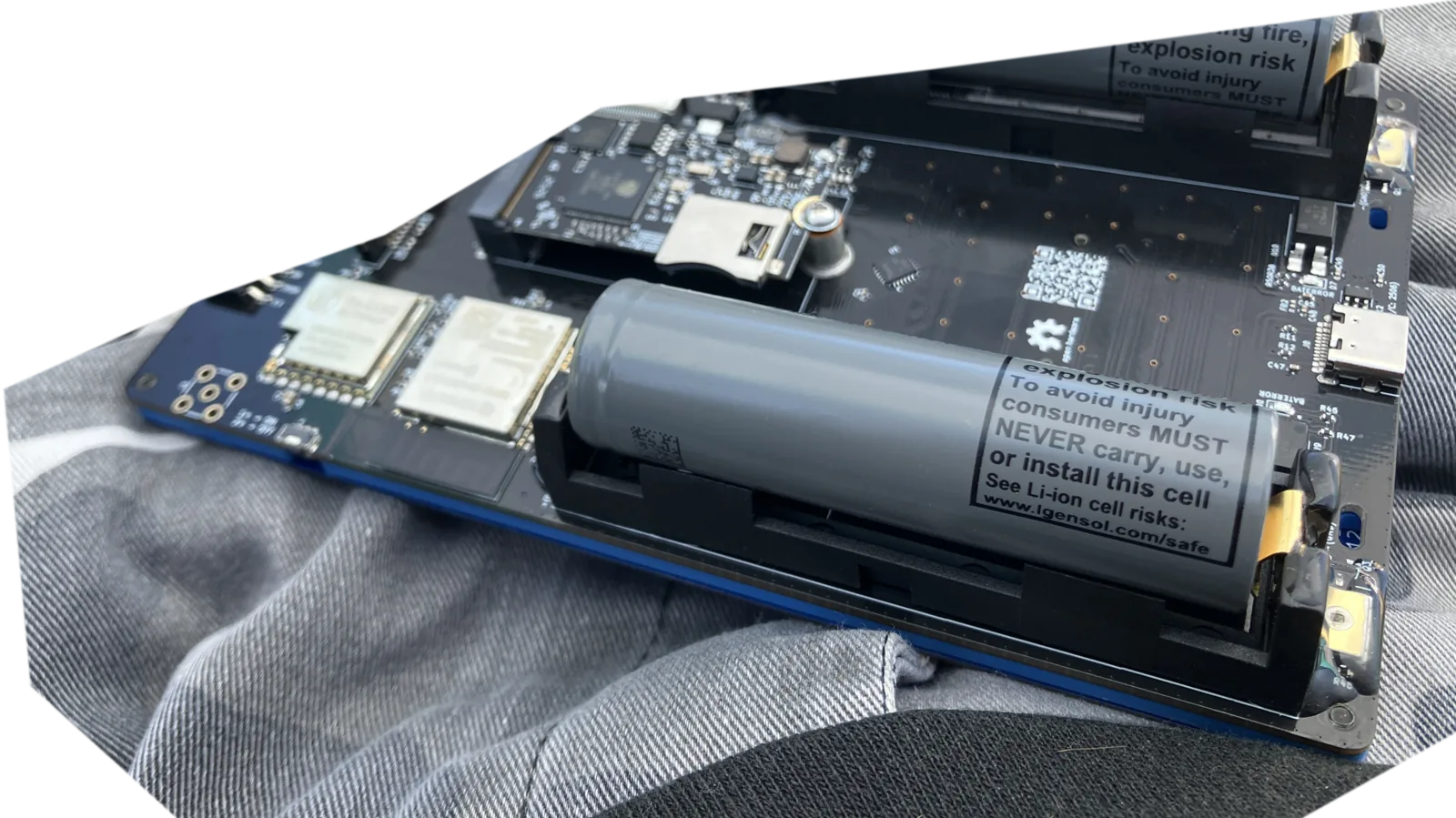
WHY2025 uses a two-ESP32 badge with LoRa module, large screen, keyboard, sensors, 18650 cells, SD card app loading, optional LoRa antenna/socket work, and repair-sensitive daughterboard connectors, per public sources.
BadgeVMS, BadgeHub app delivery, web flashing, OTA updates, SD-card app installation, and experimental Meshtastic/MeshCore paths. Public issue pages document post-event firmware and app availability problems.
Attendees still built and ran Doom, designed cases and spacers, and documented repair paths, but much of the camp memory centers on queues, safety warnings, epoxy, and late availability.
Lifecycle
LoRa use depended on attaching the connector and a suitable, matched antenna; the wiki records VNA/SWR antenna checks and warns that transmitting without a proper antenna could permanently damage RF hardware.
SourceThe wiki tracks 3D-printed cases, spacers, covers, and repair guidance, reflecting the post-event mechanical support ecosystem.
SourceOperational history
The warning shaped distribution, battery handling, user confidence, and the badge's public reputation.
The badge's technical potential was hard to realize while the camp was happening.
Badge-dependent embedded work became timing-constrained for at least one participant; this aligns with public feedback about late handout.
Many attendees could not use the badge as a nametag or as a normal camp hacking object.
Volunteers spent substantial camp time applying epoxy; users had handling and curing concerns.
The conflict forms part of the badge's production history and likely contributed to a hurried replacement effort, but individual claims should not be overstated beyond public evidence.
LoRa was not a simple out-of-box feature: users needed soldering, antenna choice or tuning, and caution with auto-transmitting firmware such as Meshtastic to avoid RF damage.
Users needed post-event reflashing and troubleshooting before the badge became a stable hacking platform.