Why It Mattered
card10 pushed the camp badge toward everyday wearable form factors and app repository workflows.
Chaos Communication Camp 2019 · Germany · 2019
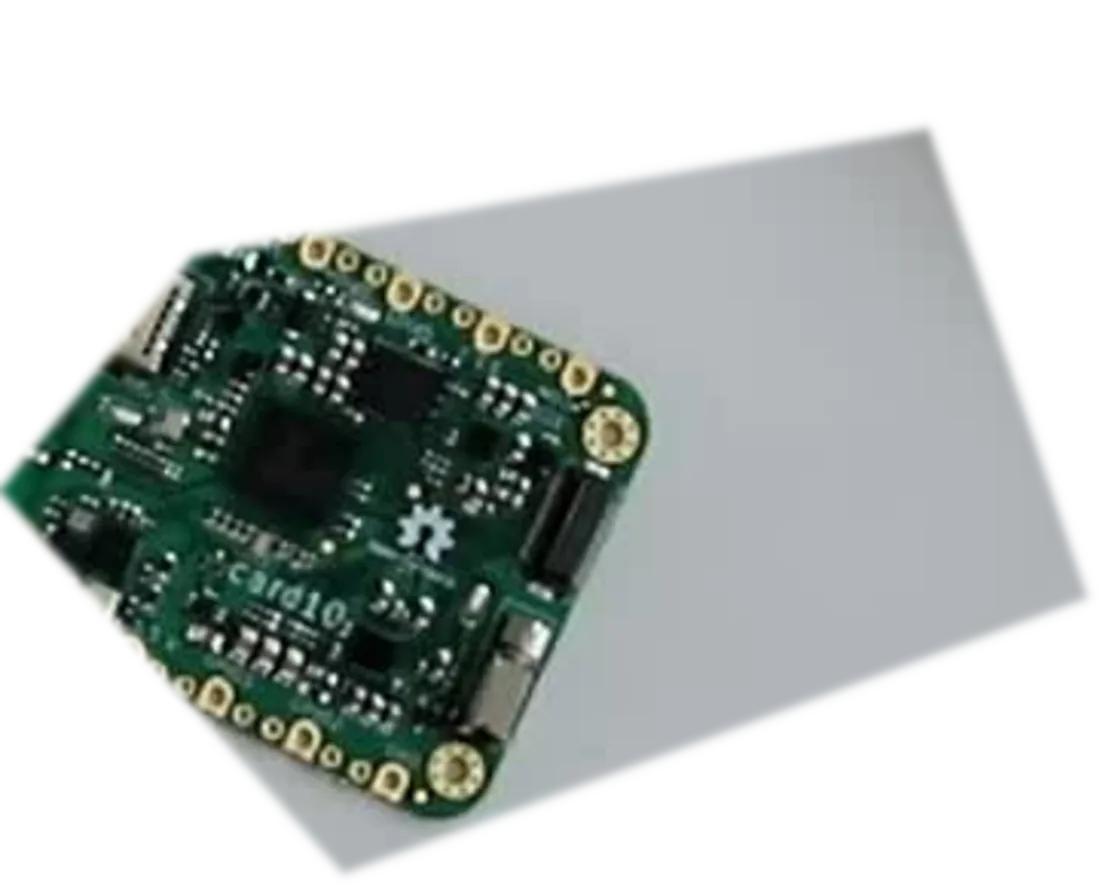
CCCamp 2019 wearable sensor badge
A wrist-worn CCC Camp badge focused on sensing, health-style signals, BLE, and a Python-friendly app ecosystem.
People
No public individual author, designer, firmware, or team credits have been seeded for this badge yet. Add named credits only when a primary badge-team page, repository, talk, or other source identifies the people or team behind the work.
card10 pushed the camp badge toward everyday wearable form factors and app repository workflows.
card10 includes ECG, Bluetooth Low Energy, optical pulse sensor, IMU with magnetometer, and environmental sensing, per public docs.
Uses Hatchery as its app repository, with firmware updates and app installation documented through the card10 project.
The name references kardía, the Greek root for heart, matching the badge's biological signal theme.
Source-backed hardware metadata
Structured technical signals seeded from public badge documentation, repositories, schematics, firmware notes, or event evidence. These fields are designed for filtering, API use, repair planning, preservation, and future Companion Gear matching.
The card10 documentation describes the 2019 camp electronic badge.
Signal sourceThe card10 documentation identifies an nRF52-class application processor.
Signal sourceThe card10 documentation describes Bluetooth Low Energy support.
Signal sourceThe card10 documentation describes the badge display.
Signal sourceThe card10 documentation exposes MicroPython app development for the badge.
Signal sourceThe card10 documentation describes motion-sensor functionality.
Signal sourceRepair, preservation, and legal lab context
Parts, tools, and supplies that match this badge's documented hardware, protocols, or preservation needs. These are category-level recommendations, not compatibility guarantees.
Display modules and related parts for repair and preservation planning.
This badge has a documented display signal. Matched technical signals: LCD.
Vendor link · selected for technical relevance
Headers, sockets, and connector supplies for display repair or replacement work.
Display headers and connectors are useful for repair and preservation planning. Matched technical signals: LCD.
Vendor link · selected for technical relevance
Debug probes for ARM/RISC-V badge development, recovery, and documentation.
Debug probes can support authorized recovery, firmware work, and documentation for microcontroller badges. Matched technical signals: nRF52.
Vendor link · selected for technical relevance
USB serial adapters for logs, recovery, and firmware documentation workflows.
This badge has a documented microcontroller platform where serial logs or flashing workflows may be relevant. Matched technical signals: nRF52.
Vendor link · selected for technical relevance
Anti-static bags and storage supplies for preserving loose badge PCBs and sensitive components.
This is documented as an electronic or hardware artifact where anti-static storage can support preservation. Matched technical signals: Electronic badge.
Vendor link · selected for technical relevance
Lifecycle
Hackaday reports a 10 EUR workshop kit for soldering electrode pads to a sacrificial USB-C cable, including a demo where pads on the temples sensed left/right eye movement.
SourceThe 2021 evolution talk documents continuing firmware, Hatchery, BLE, companion-app, sensor, and reuse work after Camp 2019.
Sourcecard10's wearable hardware was extended through Hatchery-hosted applications and firmware workflows.
SourceOperational history
This captures a real camp-experience issue: a major badge can be technically strong while still arriving late enough to affect who can hack on it during the event.
The page separates card10's wearable form factor from ordinary smartwatch expectations and keeps the focus on sensors, BLE, and hackability.