Grand Idea Studio
Publisher of the official project page, design files, schematic, block diagram, slides, workshop material, source-code links, and support-hardware documentation.
SourceDEFCON China 1.0 · China · 2019
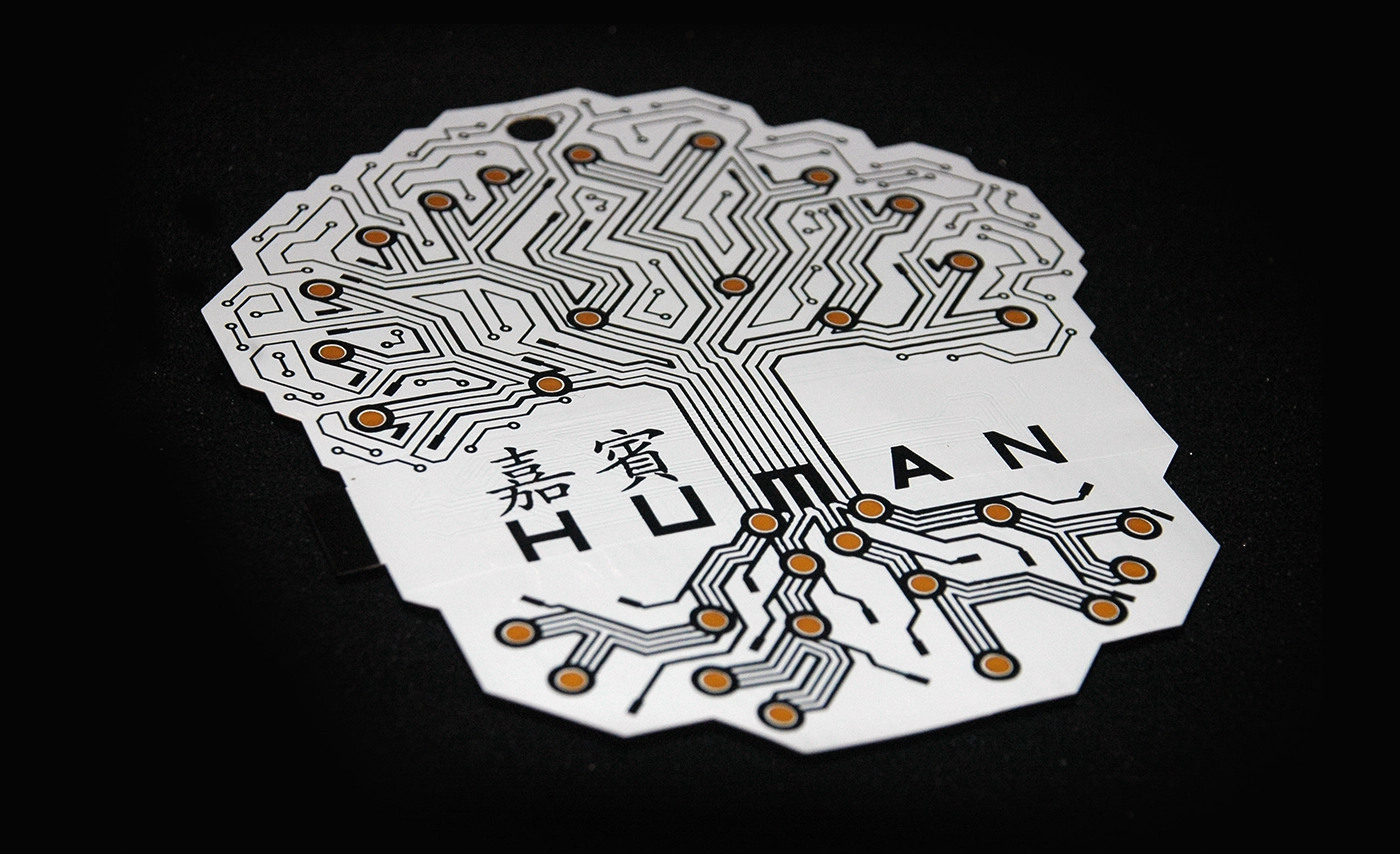
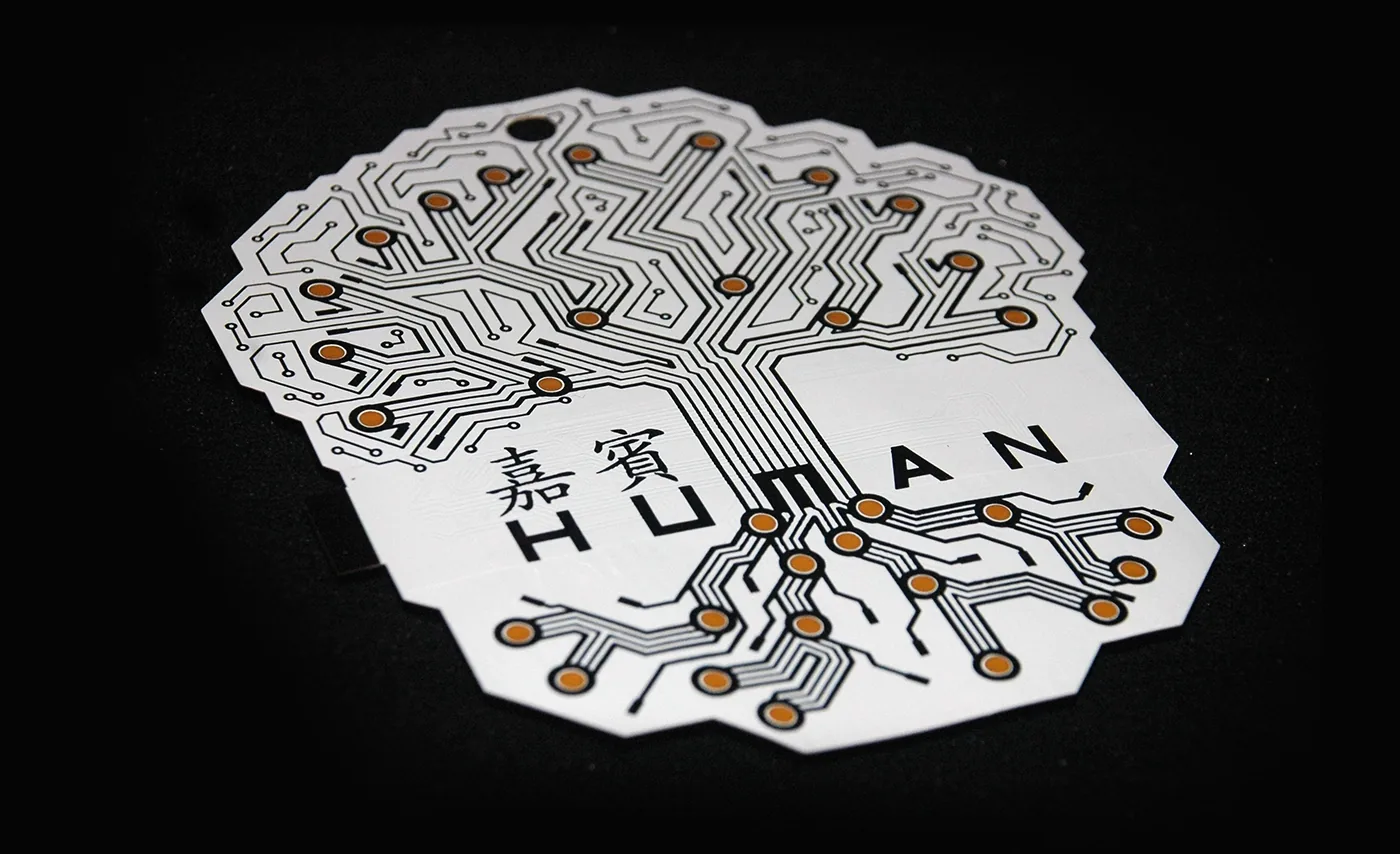
Flexible-PCB tree-game badge
A Grand Idea Studio badge for the first official international DEFCON edition, built as an artistic flexible-substrate PCB with 32 LEDs, USB connectivity, accelerometer input, role-color artwork variants, and a task-completion tree-lighting game.
People
Publisher of the official project page, design files, schematic, block diagram, slides, workshop material, source-code links, and support-hardware documentation.
SourceGrand Idea Studio and InfoconDB identify Joe Grand as the DEFCON China 1.0 badge creator and presentation speaker.
SourceThe official international DEFCON edition for which the badge was created.
SourceIt brings mainland China into the worldwide compendium and documents DEF CON badge culture crossing from Las Vegas into an international edition while preserving Joe Grand's open design-file workflow.
The badge is a flexible printed circuit board with an ATmega328P/Arduino Mini class controller at 3.3 V and 8 MHz, LIS3DH accelerometer, FT231X USB serial bridge, 32 LEDs driven through 74HC595 logic, FPC edge connector, and CR2032 power, with 3,300 manufactured badges across Human, Speaker, Village, Goon, Press, and Sponsor artwork variants, per Grand Idea Studio's project page and block diagram.
The firmware's main behavior is a game where attendees illuminate the tree by completing conference tasks, per public descriptions. The official project page also links Arduino Pro Mini source code, Raspberry Pi programming scripts, test procedure material, creation slides, demo videos, and badge-hacking workshop slides.
The badge intentionally used an approachable game instead of an opaque puzzle because many DEFCON China attendees were new to hacker events. The same task-completion idea later informed the DEF CON 27 crystal badge quest.
Lifecycle
Attendees illuminated roots and branches of the badge's tree by completing conference tasks, with completion turning the badge into a sparkling tree display.
SourceThe badge used a flexible substrate PCB with ATmega328P control, accelerometer input, USB serial, CR2032 power, and 32 LEDs driven through shift-register logic.
SourceGrand Idea Studio published shield and breakout documentation, Gerbers, OSH Park links, and Arduino Uno source so attendees could isolate and hack the flexible badge hardware.
SourceThe official workshop slides documented guided hacking paths for attendees working with the flexible-PCB badge and related hardware.
SourceOperational history
The public badge page, image archive, and API now point at a real upstream badge photo with source URL, license, attribution, and processing notes preserved.