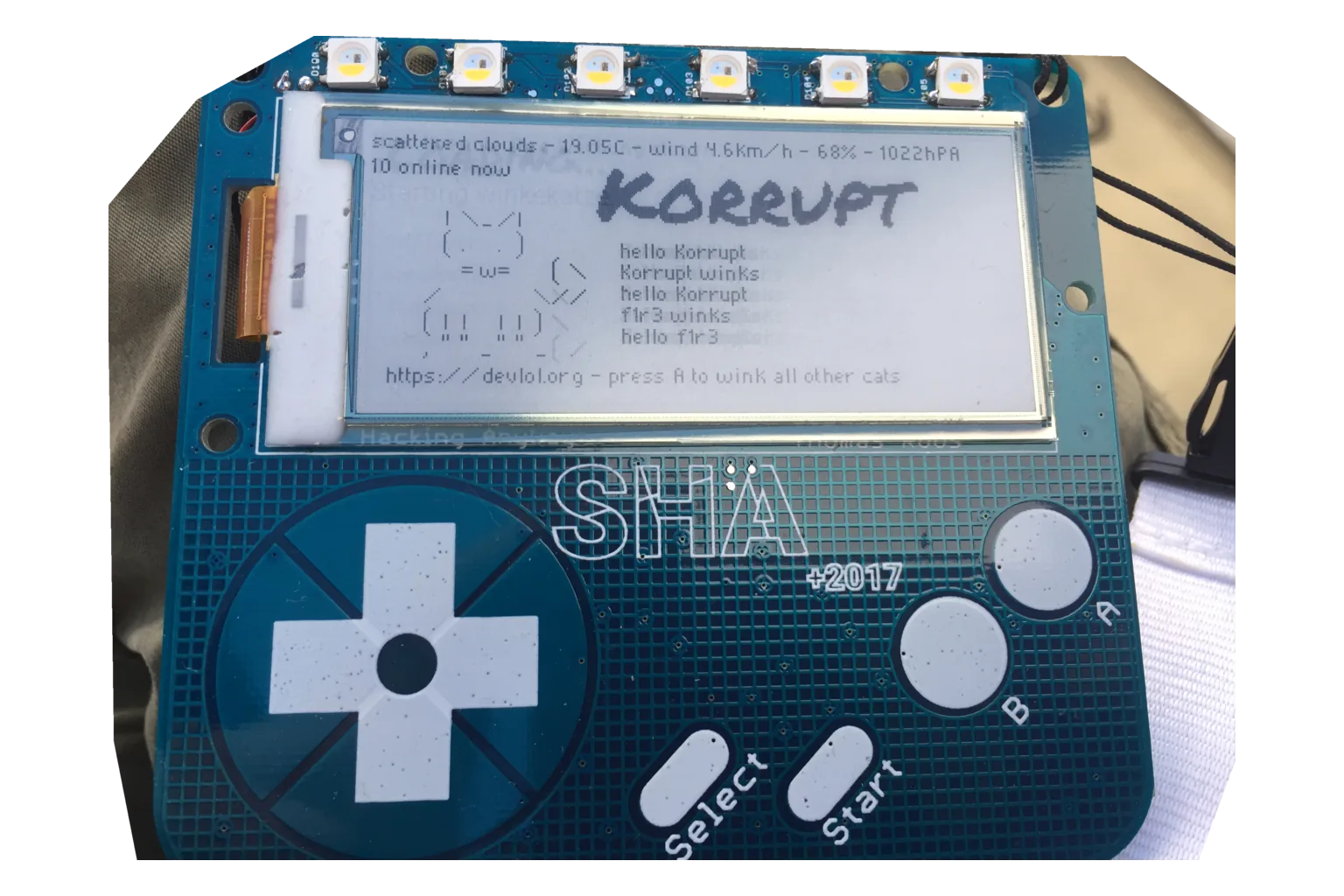
SHA2017 Badge
A Badge.Team-supported Dutch camp badge with ESP32, e-paper, WiFi, Hatchery apps, WebUSB install paths, production lore, and a lasting role in European badge culture.
Dutch Hacker Camps
A milestone Badge.Team badge and predecessor to the modern Dutch camp badge ecosystem.
Scoutinglandgoed Zeewolde · Netherlands · 2017
A Badge.Team-supported Dutch camp badge with ESP32, e-paper, WiFi, Hatchery apps, WebUSB install paths, production lore, and a lasting role in European badge culture.
Lifecycle
SHA2017 used the Badge.Team Hatchery path for discoverable badge applications, and the current Hatchery index still exposes SHA2017-compatible project records.
The SHA2017 docs and Hack42 WebUSB installer preserve the browser-based badge installation path used by the Badge.Team platform.
Badge.Team's ESP32 platform firmware repository anchors SHA2017 in the reusable firmware lineage later Badge.Team records build on.
The hardware docs record a 6-pin SAO connector and IR receive/transmit hardware, giving SHA2017 both badge-add-on and badge-to-badge interaction surfaces.
Sprite_tm documented adapting a Gameboy emulator to the SHA2017 badge's e-paper display, preserving a concrete example of post-camp app hacking under unusual display constraints.
SHA2017 sits in the early Badge.Team lineage where apps, contributed code, documentation, and post-event platform work became central.
The event wiki links appfs as the way applications were stored and loaded on the badge, making installable apps part of the platform instead of just firmware demos.
Operational history
SHA2017 is remembered as successful, but its production story still shows the logistics risk behind ambitious camp badges.
The badge's visual polish came with substantial volunteer assembly effort that belongs in the compendium's production history.
The page should keep multiple source links instead of pretending there is one complete canonical source.
This is useful lore for app-store records: the badge could run surprising software, but display technology shaped what was practical.
The badge facts and visual provenance are now aligned: the image record preserves source URL, CC BY-SA 4.0 license, attribution, and cutout-processing notes.
The install workflow was accessible for many users, but the compendium records it as an ecosystem dependency rather than firmware alone.