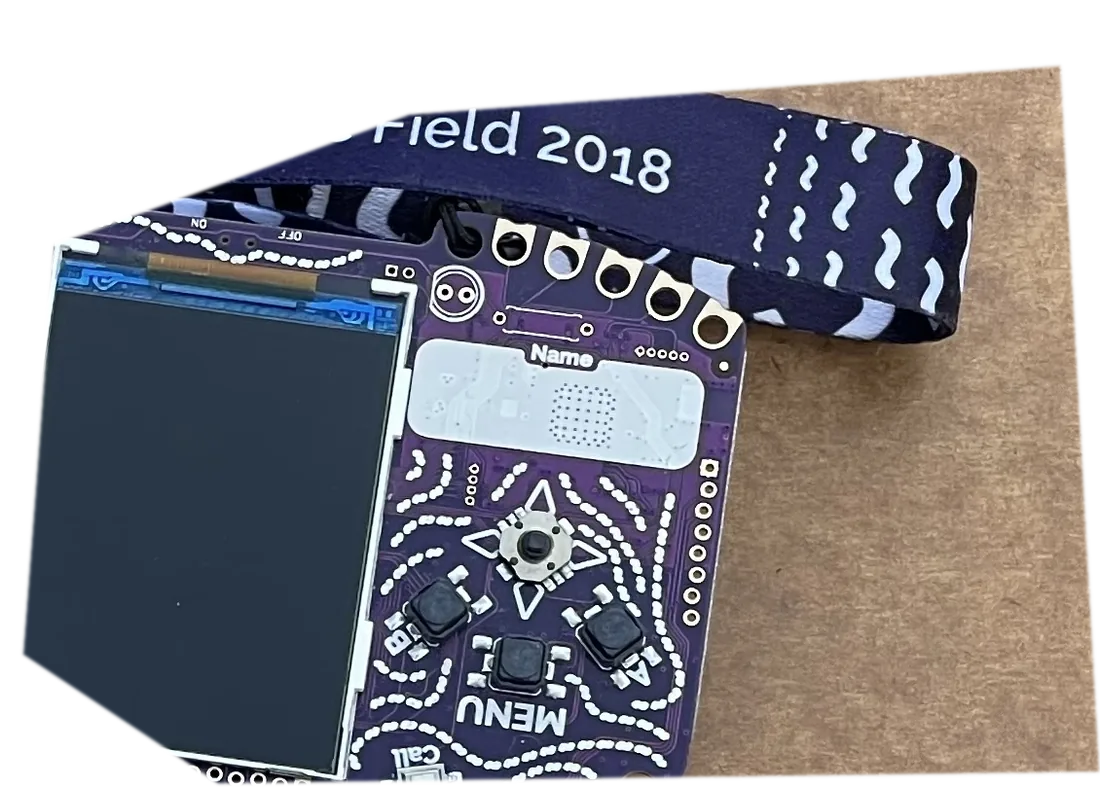
TiLDA MK4
An EMF badge with MicroPython, WiFi, GSM/SMS/calling, screen, sensors, keypad, Grove connectors, and a badge store.
Electromagnetic Field
The TiLDA MK4 badge combined MicroPython, sensors, WiFi, GSM, and a badge store.
Eastnor Castle Deer Park · United Kingdom · 2018
An EMF badge with MicroPython, WiFi, GSM/SMS/calling, screen, sensors, keypad, Grove connectors, and a badge store.
Lifecycle
The MK4 wiki documents installing apps directly on badge through the Badge Store app: choose Install, pick a category/app, save it, then restart back to the launcher.
Apps were submitted by adding a folder with main.py metadata headers to the Mk4-Apps GitHub repository, validating with tilda_tools, and opening a pull request; official rules banned malicious apps and code/image hot-loading without good reason.
Base firmware updates used tilda-tools over USB/DFU rather than the Badge Store; the update page says they fixed stability, performance, and phone-call problems but wiped apps and settings.
TiLDA MK4 exposed Grove headers, conductive thread points, and a SAO connector for sensors, add-ons, and badge-to-badge hardware experiments.
The MK4 wiki records Grove UART/I2C connectors, a Shitty Add-Ons connector, conductive-thread points, Neopixel header use, and UART numbering gotchas for hardware hacking.
Operational history
MK4 needs lifecycle treatment because the shipped camp experience, app behavior, and post-event firmware state were not identical.
The app store was curated and collaborative rather than an anonymous binary upload service.
The detail page should preserve first-boot and recovery behavior, not only final hardware specifications.
Useful reminder that badge RF/cellular features can be field-sensitive.