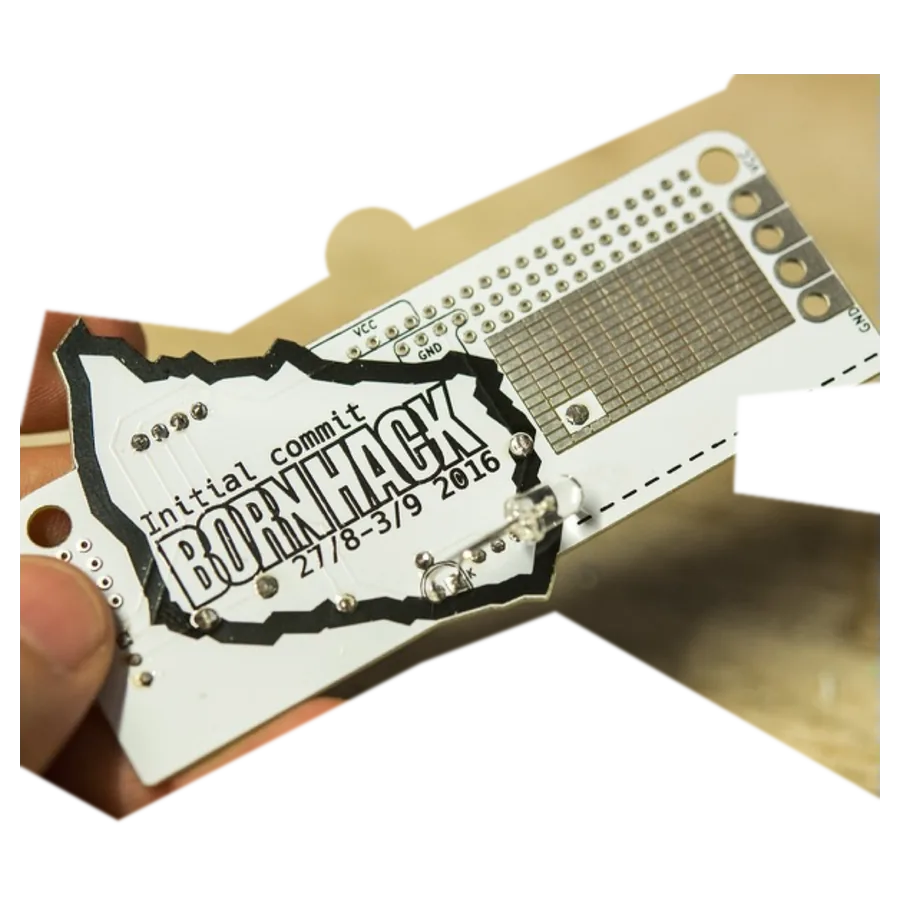
BornHack 2016 Badge
Initial Commit soldering-kit badge
A hacker-friendly solder-it-yourself badge kit combining a nametag, flashlight, Joule Thief circuit, AA battery, and prototyping area.
Country dossier
Worldwide badge coverage for Denmark, grouped into seeded badges, event editions, add-ons, operational issues, resources, and evidence sources.
Seeded artifacts
Initial Commit soldering-kit badge
A hacker-friendly solder-it-yourself badge kit combining a nametag, flashlight, Joule Thief circuit, AA battery, and prototyping area.
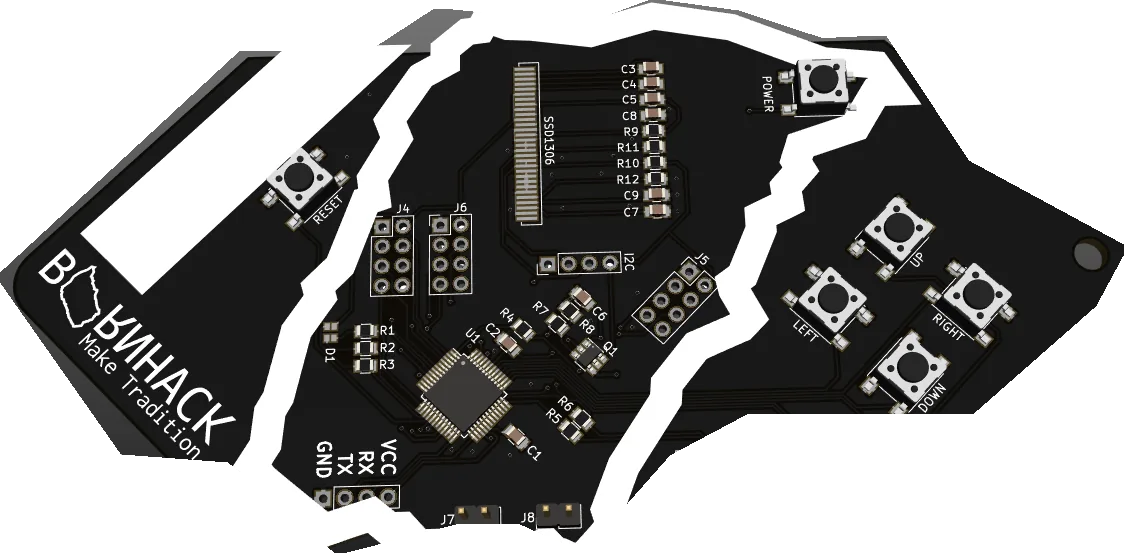
Happy Gecko OLED programming badge
BornHack's first deeply programmable badge used a Silicon Labs Happy Gecko MCU, OLED display, buttons, USB, and an example-heavy firmware repository.
Happy Gecko plus Bluetooth badge
A Happy Gecko-based BornHack badge that added a Nordic nRF51 Bluetooth-capable microcontroller and a breakout-board branch for hardware add-ons.
Color screen, MicroSD, and IR badge
A Happy Gecko badge with 240x240 color display, MicroSD card reader, basic infrared communication, and a C firmware codebase split into modules.
CircuitPython LED-matrix IR badge
A SAMD21 CircuitPython badge with a charlieplexed LED matrix, IR badge-to-badge communication, navigation buttons, SAO header, and exposed pads.
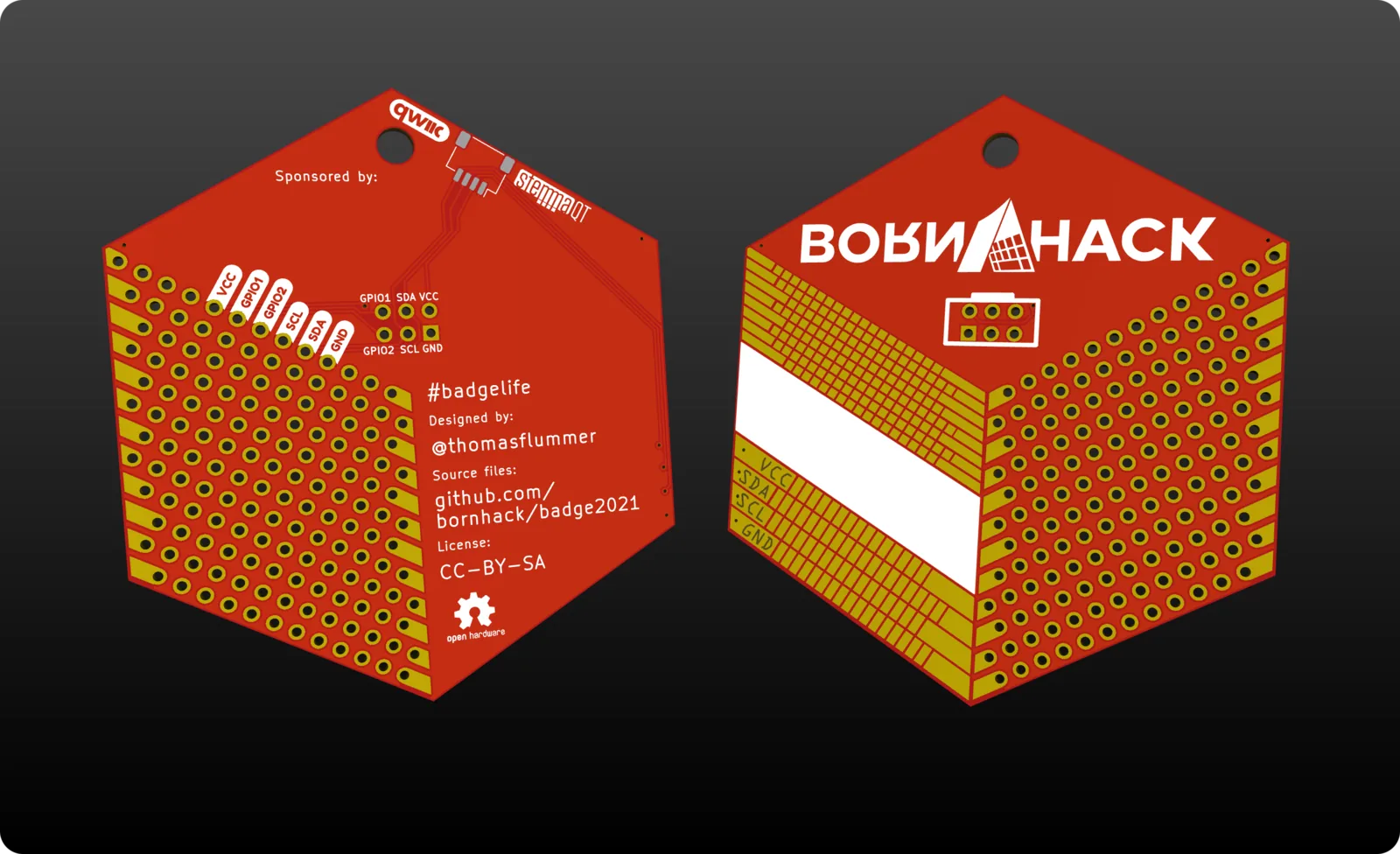
Electronics-side DIY expansion badge
A deliberately minimal DIY badge focused on simple electronics, SAO, Qwiic/STEMMA QT, and component-level exploration rather than preloaded compute.
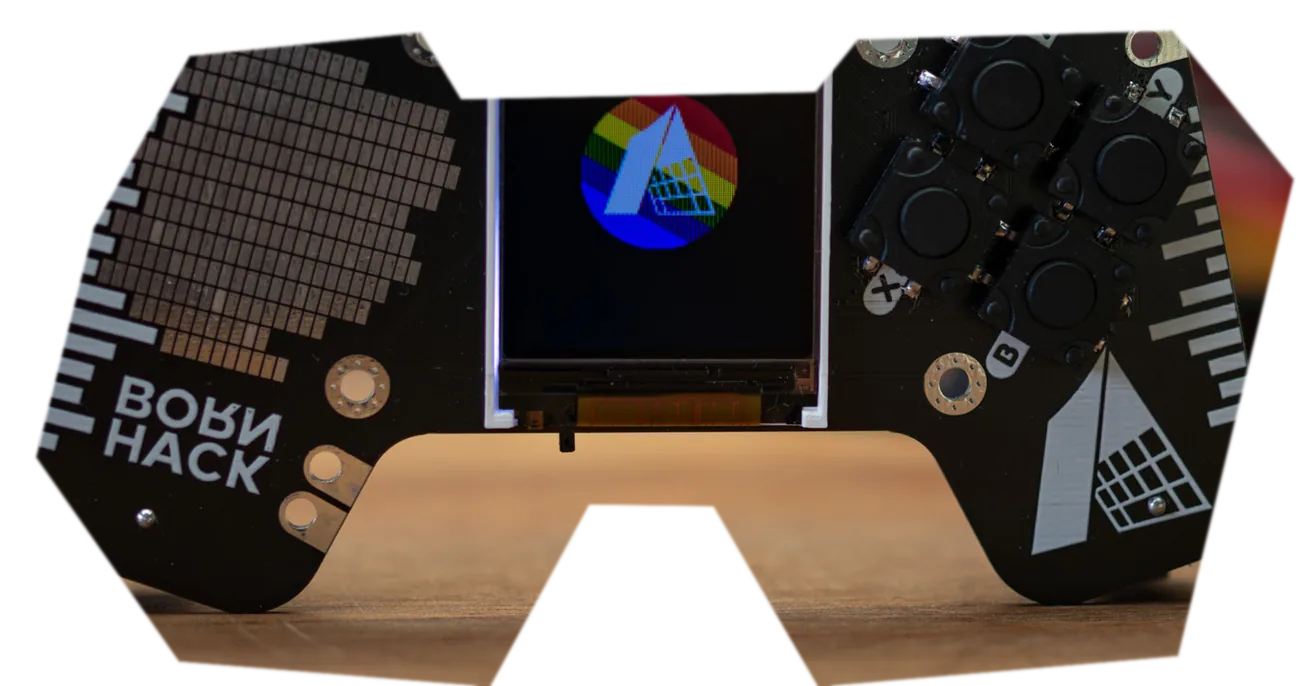
RP2040 CircuitPython gaming badge
A game-controller-shaped BornHack badge built around RP2040, CircuitPython, a color LCD, and expansion connectors.
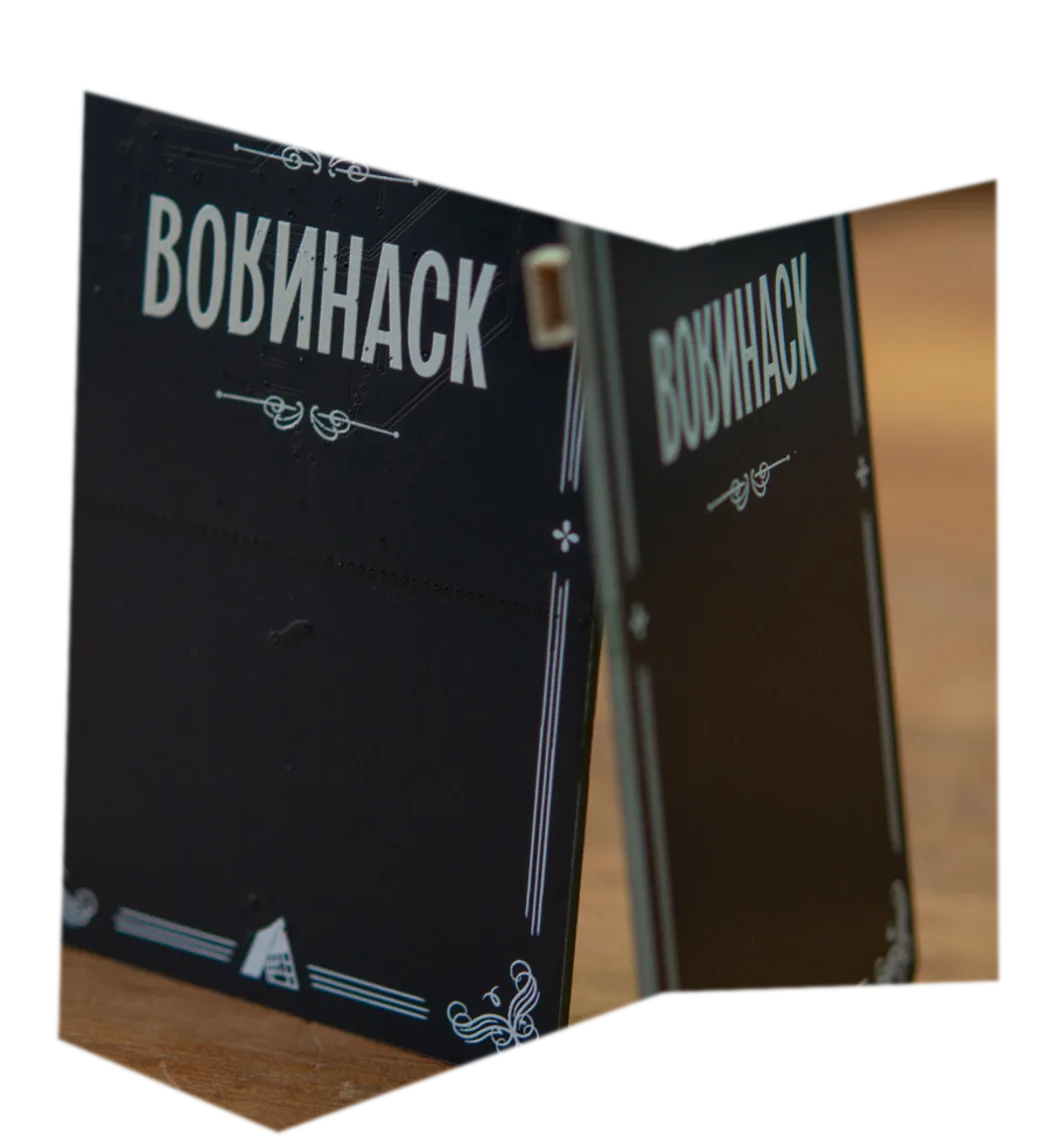
NFC reader and tag badge pair
A two-badge NFC year: one tag badge using NXP NTAG I2C Plus and one RP2040 reader badge using NXP PN7150 with card-emulation capability.
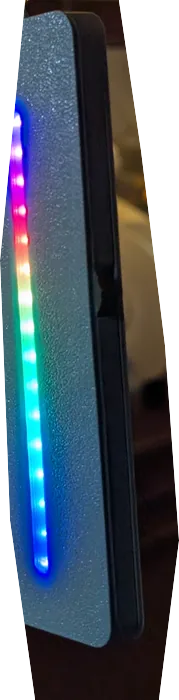
ESP32-C3 POV badge
An ESP32-C3-oriented BornHack badge with public firmware links, POV hardware files, Rust examples, workshop firmware, and a 3D-printable case branch.
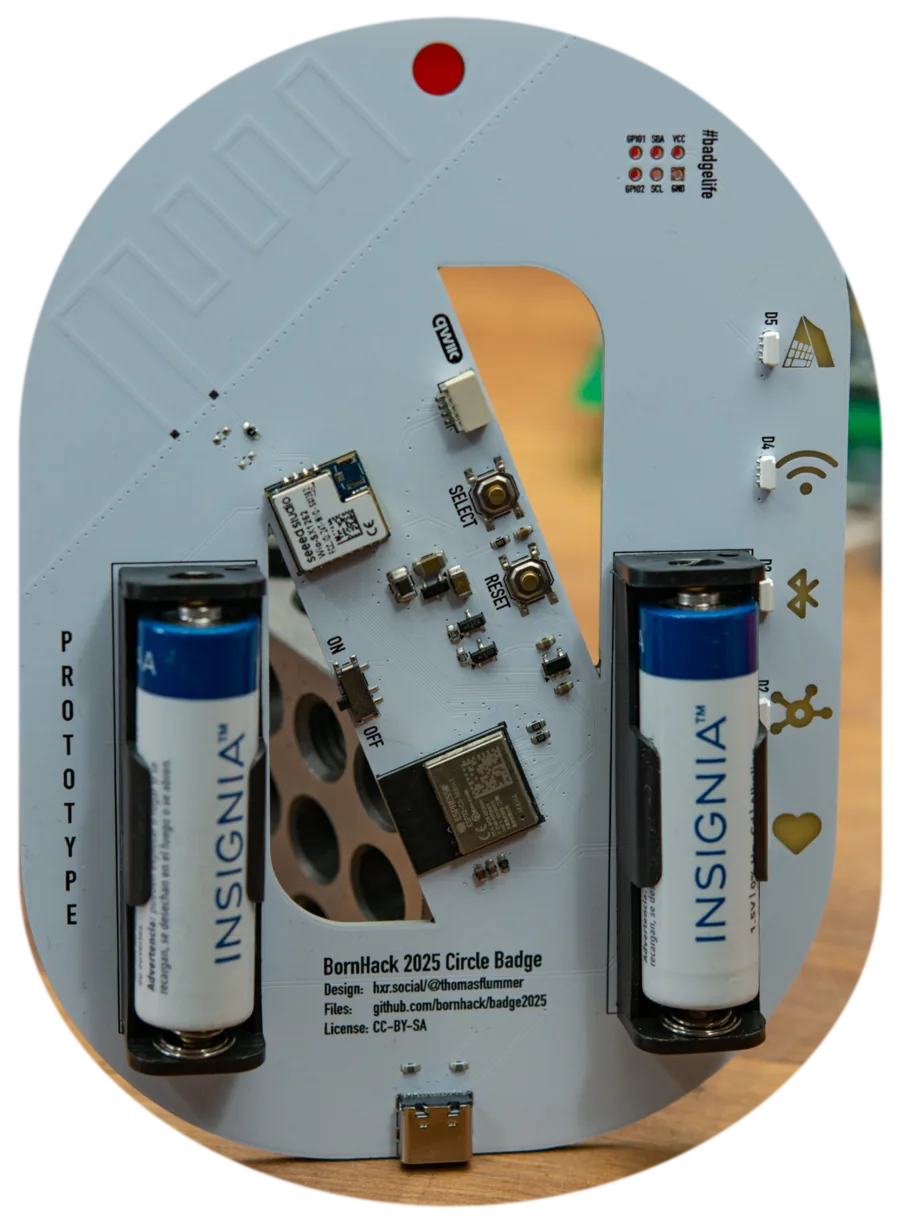
LoRa and Meshtastic badge
A circular ESP32-C3 badge focused on LoRa, Meshtastic, WiFi, BLE, RGB LEDs, external antenna use, and expansion connectors.
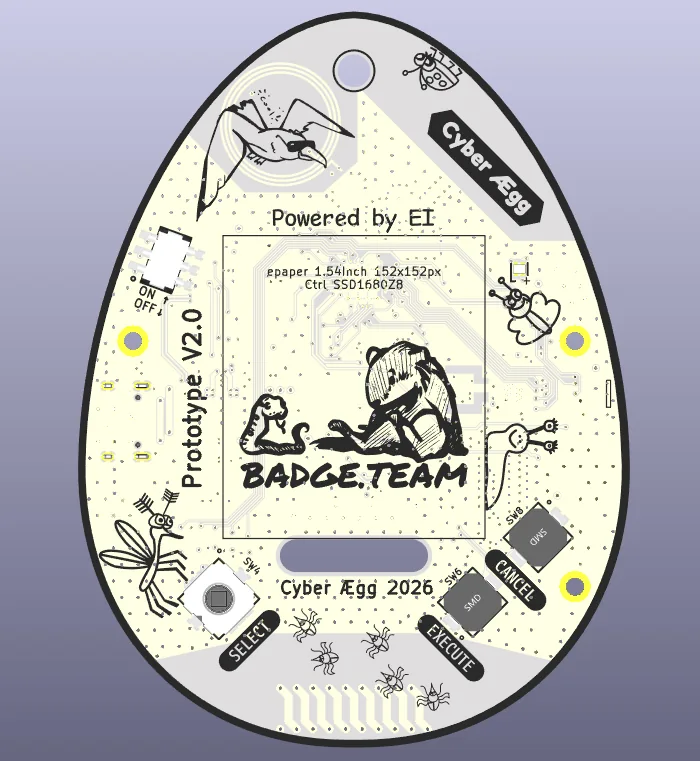
Cyber Ægg LoRa mesh badge
BornHack 2026 is documented by Badge.Team as the Cyber Ægg egg-shaped badge: nRF52840/NFC, SX1262 LoRa, 1.54-inch black/red/white e-paper, tri-colour visuals, QWIIC, USB-C, and BornPets, with open Codeberg hardware and firmware links.
Events
The initial BornHack badge was a solder-it-yourself electronics kit with a Joule Thief LED circuit and prototyping area.
BornHack moved into programmable badges with a Happy Gecko microcontroller, OLED display, buttons, USB, and example code.
The 2018 badge combined a Happy Gecko controller with a Nordic nRF51 Bluetooth-capable microcontroller and breakout boards.
The 2019 BornHack badge added a 240x240 color display, MicroSD card, and IR communication.
A SAMD21 CircuitPython badge with a charlieplexed LED matrix, IR communication, buttons, SAO header, and exposed pads.
A deliberately DIY electronics badge focused on simple components, SAO, and Qwiic/STEMMA QT expansion rather than onboard compute.
BornHack's RP2040-powered Game On badge emphasized CircuitPython and handheld games.
BornHack explored NFC with paired tag and reader badges, RP2040, PN7150, NTAG I2C Plus, and CircuitPython.
The 2024 badge centered on ESP32-C3 firmware, POV-badge hardware, community firmware examples, and a 3D-printed case path.
A circular ESP32-C3 LoRa/Meshtastic badge with external antenna, RGB LEDs, Qwiic/STEMMA QT, and SAO expansion footprints.
The July 15-22, 2026 BornHack on Funen whose Badge.Team docs document the shipped Cyber Ægg nRF52840/SX1262 LoRa mesh badge and attendee-facing first-use/flash workflows.
Lifecycle
The docs combine nRF52840 BLE/NFC hardware, an SX1262 LoRa radio, MeshCore contact-exchange framing, and NFC tag station taps tied to attendee-facing flow.
Badge.Team now describes a BornPets virtual pet inspired by Tamagotchi and mini-games as the active badge software path, with top-level screens available in public usage docs.
The docs document a 1.54-inch 152x152 black/red/white e-paper display, 5-way joystick, Execute/Cancel buttons, RGB LED, piezo buzzer, USB-C, Li-ion power, and QWIIC expansion in an on-camp artifact context.
Konrad Beckmann's README-listed project used the RP2040 game badge as a video player and AM radio transmitter.
Jens 'JWolf' Larsen's README-listed adventure game preserved the Game On badge as a homebrew handheld target.
Pieter Vander Vennet's README-listed Flappybirds project appears in the BornHack 2022 badge project list.
Glymphie's README-listed Pacman project is one of the preserved homebrew examples for the Game On badge.
Daniel Lundsgaard Skovenborg's README-listed Survivator arcade game used a micro:bit for controls.
The breakoutboards branch collected accessory board designs and parts information for the 2018 badge.
Through-hole and SMD prototyping areas invited campers to add LEDs, sensors, radios, or other circuits to the simple Joule Thief badge.
The badge was prepared for SAO and Qwiic/STEMMA QT expansion, shifting the focus toward external modules and simple electronics.
The BornHack 2022 badge exposed accessory connectors and a prototyping area for hardware add-ons.
The unpopulated SAO v1.69bis header and rear IO pads made the LED-matrix badge useful for soldered extensions.
LoRa depends on the supplied external antenna, and the repository includes an OpenSCAD case intended to hold battery, antenna, and LEDs.
The README links Badge.Team firmware, a flasher, Rust examples, workshop firmware, and a 3D printed case branch.
The main Badge.Team page links Codeberg homes for Cyber Ægg hardware and firmware, with hardware docs identifying KiCad files and software summary pages pointing at Rust/Embassy firmware work.
Operational history
Users need the supplied external antenna and should avoid sticking it directly to the copper-heavy PCB because that can reduce RF performance.
The public badge page, image archive, and API point at a licensed upstream repository render with source URL, MIT license basis, attribution, and processing notes while avoiding generated, placeholder, social, or uncleared imagery. The render is an approved render source and may differ from final production photos or event-shot images.
The public badge page, image archive, and API point at a licensed physical badge-in-case photo derivative with source and attribution preserved.
The record remains source-backed and image-free rather than copying repository diagrams, documentation screenshots, event media, attendee photos, placeholders, or generated approximations.
The record remains source-backed and image-free rather than copying repository diagrams, documentation screenshots, event media, attendee photos, placeholders, or generated approximations.
The record remains source-backed and image-free rather than copying repository diagrams, documentation screenshots, event media, attendee photos, placeholders, or generated approximations.
The entry can keep hardware/software specifics while explicitly tracking remaining gap areas (errata, production notes, and end-user bug/coverage updates that are still not published).
