
Fri3d 2016 Badge
Arduino-compatible AVR camp badge with IR play
A custom Fri3d Camp badge derived from Arduino Micro-era hardware, designed for roughly 300 attendees as both a beginner-friendly badge and a reusable Arduino development board.
Country dossier
Worldwide badge coverage for Belgium, grouped into seeded badges, event editions, add-ons, operational issues, resources, and evidence sources.
Seeded artifacts
Arduino-compatible AVR camp badge with IR play
A custom Fri3d Camp badge derived from Arduino Micro-era hardware, designed for roughly 300 attendees as both a beginner-friendly badge and a reusable Arduino development board.
10th-edition electronic badge
BruCON's 10th-edition electronic badge, documented as a schedule, venue-map, reminder, alcohol-sensor, and public ESP-IDF/KiCad badge project.
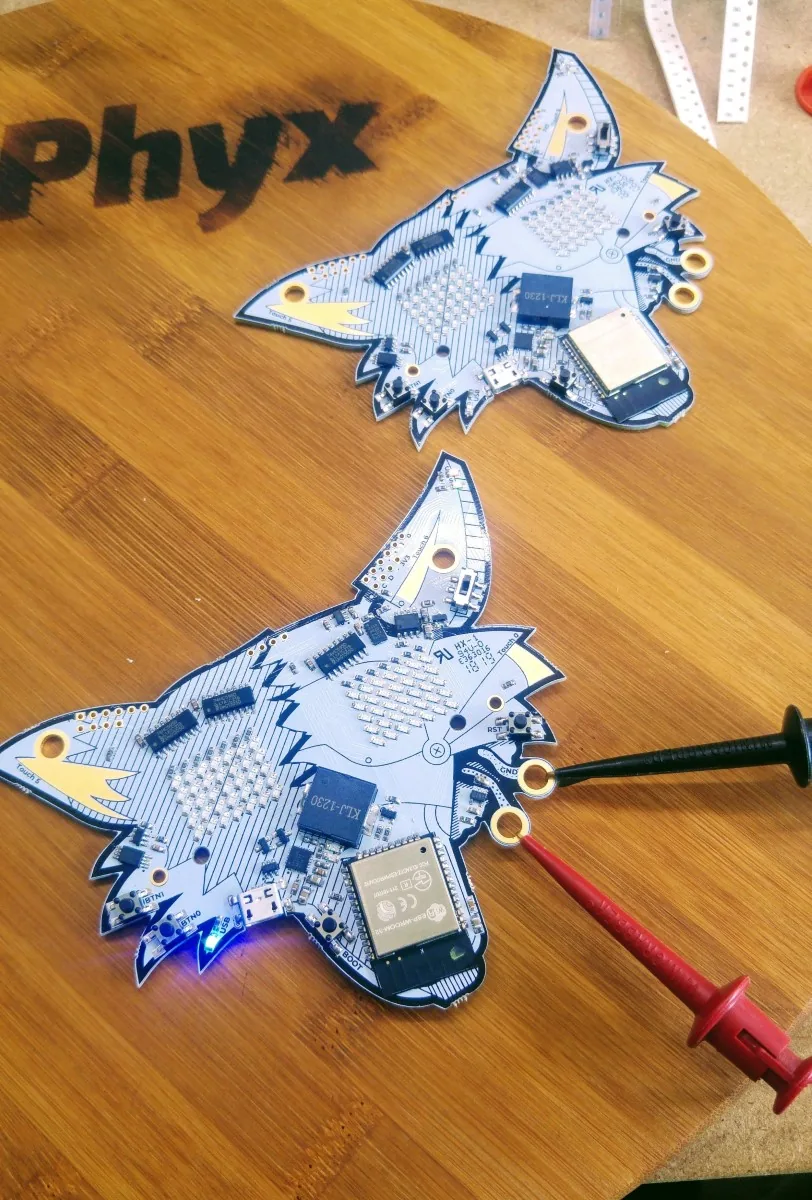
ESP32 fox badge with jewels and robot paths
A fox-shaped ESP32 badge with 5x7 LED eye matrices, touch pads, buzzer, 18650 power, Lego Technic mounting holes, and jewel add-ons.
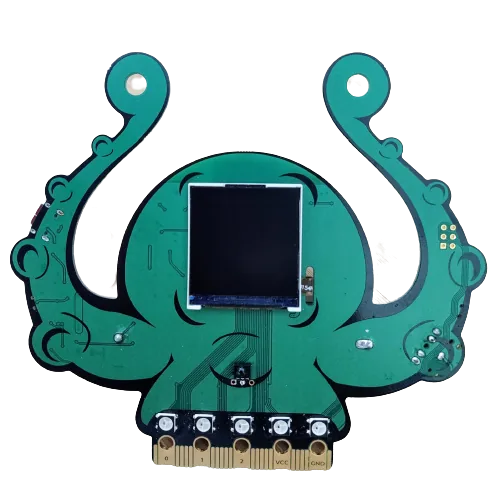
ESP32-WROVER badge with GameOn and Time Blaster
A Fri3d badge with ESP32-WROVER, 240x240 color display, IR receiver, accelerometer, buttons, and a documented add-on ecosystem.
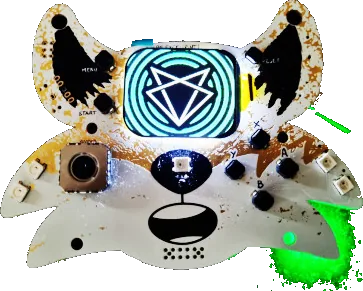
ESP32-S3 badge with blaster and communicator add-ons
A Fri3d ESP32-S3 badge with LCD, joystick/buttons, SD card, USB-C, LiPo power, MicroPython/Arduino docs, and blaster/communicator add-ons.
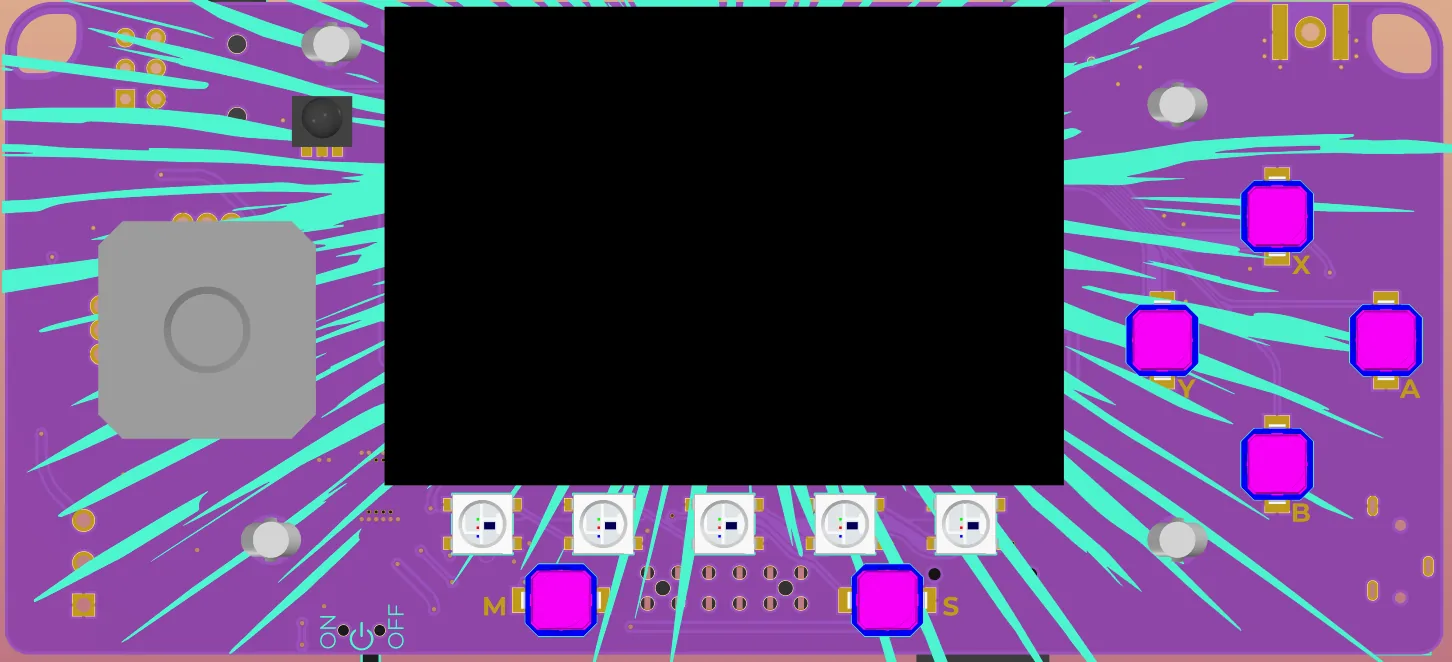
Completed-camp ESP32-S3 maker badge with open Revision 02 hardware
A source-backed record for Fri3d Camp 2026's main badge. The organizer's public Revision 02 hardware, firmware, and documentation repositories describe an open ESP32-S3 platform with extensions, apps, and repair paths; the organizer's event index now lists the August camp among past events. Neither source establishes individual handout, production, or final deployed-image outcomes.
Events
The first documented Fri3d custom badge year, built as an Arduino-compatible AVR learning and IR interaction platform for attendees.
The 10th BruCON edition, with an electronic badge documented through the event retrospective and public GitHub repository.
The Ph0xx ESP32 fox badge year, with LED eyes, add-on jewels, battery power, touch input, and robot/hardware-hack paths.
An ESP32-WROVER camp badge with display, add-ons, GameOn, Time Blaster, and open hardware/software references.
A modern ESP32-S3 Fri3d badge with LCD, controls, MicroPython/Arduino docs, blaster and communicator add-ons, and reset/update workflows.
The completed August 14-16, 2026 sixth Fri3d Camp at Domein De Kluis. Its organizer documentation and public firmware repository identify a 2026 ESP32-S3 badge platform, while individual handout, production, and final deployed-image outcomes remain unrecovered.
Lifecycle
The official Arduino guide provides a custom fri3d-esp32 board package, Fri3d Badge 2024 board target, examples, upload flow, and a path for sketches launched through the default firmware.
The Flamingo blaster uses an IR LED, two IR receivers, four WS2812 LEDs, a buzzer, trigger, team selector, LANA TNY module, and a 3.5 mm BadgeLink connector to turn the badge into a camp game peripheral.
The 2016 badge was explicitly inspired by Mitch Altman's TV-B-Gone and preserved a TV-B-Gone-style app path in the Arduino badge concept.
The ToF SAO add-on provides a VL53L7CH 8x8 multizone sensor, eight addressable RGB LEDs, I2C access at 0x52, a Class I 940 nm laser, and an official MicroPythonOS app example.
The server tree records the PHP/MySQL workflow around badge enrollment, nicknames, alcohol-sensor data, and schedule JSON generated from BruCON's Sched export.
The communicator add-on is documented as part of the 2024 badge ecosystem.
A community Arduino nofrendo port ran NES games on the Fri3D 2022 badge with display output, buzzer audio, ROM loading from SPIFFS, and a documented START-button workaround.
The Ph0xx project describes an Air jewel that could interface with a dust particle sensor and GPS, extending the badge into environmental sensing.
The badge is documented as updating the schedule, showing the venue map, and reminding attendees about talks and workshops.
The production logs credit a Christophe-designed script that scanned for new USB ports and programmed multiple badges, supporting the 650-board test and assembly flow.
The Ph0xx logs record a Fri3d Camp weather-balloon launch carrying a Ph0xx with the Air Jewel to measure air quality; the dust sensor stopped working at very low external temperature.
The repository README links the BruCON0xA release as the firmware version installed on the conference badge, preserving the shipped build rather than only source head.
Fri3d 2024 documentation includes a blaster add-on for camp play and badge interaction.
Fri3d 2022's add-on ecosystem includes GameOn-style game hardware tied to badge play.
The Time Blaster add-on path captures the badge as a game and camp-activity peripheral.
The Ph0xx project documents jewel add-ons as part of the intended hardware play surface.
The official badge documentation identifies a 12-pin connector with I/O and multiple power options, plus an optional SAO connector for physical expansion boards.
The repository preserves the KiCad project, board files, schematic, generated Gerbers, and position files needed to study or reproduce the badge PCB.
The official 2026 badge documentation says its Badge Link / Blaster connector is compatible with the 2022 Time Blaster and the 2024 Big Flamingo Gun 9000.
The Ph0xx logs document 4.2 mm holes on an 8 mm grid so the badge could mount into LEGO Technic-compatible builds.
The documented solder-it-yourself LoRa kit adds a Seeedstudio Wio-SX1262-N module and spiral antenna, with an optional SMA connector and 868 MHz antenna extension.
After camp, the badge could function as a small Arduino-like development board, keeping the badge useful for learning and experiments beyond the event.
The Bot jewel boosted power for four large servos and was documented as the building block for turning Ph0xx into a bipedal robot.
The Ph0xx documentation points toward turning the badge into or mounting it on a robot using its hardware and mounting holes.
The official 2026 documentation says the main badge runs a customized MicroPythonOS build with pre-installed apps, an App Store, custom MicroPython development, and local or camp-assisted firmware restoration paths.
Fri3d 2024 docs expose BadgeLink, MicroPython, Arduino, USB, WiFi, update, and reset workflows as first-class extension paths.
The logs describe a web tool from an Area 3001 member that let attendees define LED-eye animations and generate Arduino code for Ph0xx.
Operational history
The record presents the expansion surface as intentional maker hardware, not risk-free plug-and-play peripherals.
Fri3d 2024 has multiple programming paths, but they are not equivalent: users need to understand whether they are using the managed MicroPython partition or replacing the default firmware.
The page separates an impressive post-event software port from a complete game-console experience.
The catalogue can mark the event complete without converting a planned handout statement into a completed attendee-distribution or production claim.
The dossier should stay conservative until photos, final attendee firmware notes, and any workshop pages are recovered.
The catalogue records the released software architecture and recovery workflow without converting a public repository into claims about final attendee experience.
The public badge page, image archive, and API point at a licensed upstream raster asset with source and attribution preserved.
The public badge page, image archive, and API point at a source-page image with exact URL, CC BY-SA 4.0 license basis, attribution, and processing notes while avoiding generated, placeholder, social, or uncleared imagery.
The public badge page, image archive, and API point at a licensed original-photo derivative with source and attribution preserved.
The public badge page, image archive, and API point at a source-controlled original photo with source URL, license basis, attribution, and processing notes while avoiding generated, placeholder, social, or uncleared imagery.
The Belgium record remains source-backed and image-free rather than copying source-page media, documentation screenshots, event photos, social media, placeholders, or generated approximations.
Useful context for comparing later camp badge battery and safety decisions.
This preserves the operational reality behind the badge, not just the attendee-facing utility.
Fri3d 2018 belongs in the operational history of camp badges: even a strong design still had small-run manufacturing throughput constraints.
Good recovery docs reduce the risk that app or firmware experiments permanently strand an attendee's badge.
The archive should treat the tagged release as historically important even where later source changes may differ from the build attendees actually used.
The dossier is now stronger than a first-pass retrospective record while still keeping component lists tied to inspectable files.
The page should be expanded with original workshop/app pages where available.


