Eric Evenchick
Author of the Hackaday report used for the non-electronic-electronic badge framing and PCB construction details.
SourceDEF CON 21 · United States · 2013
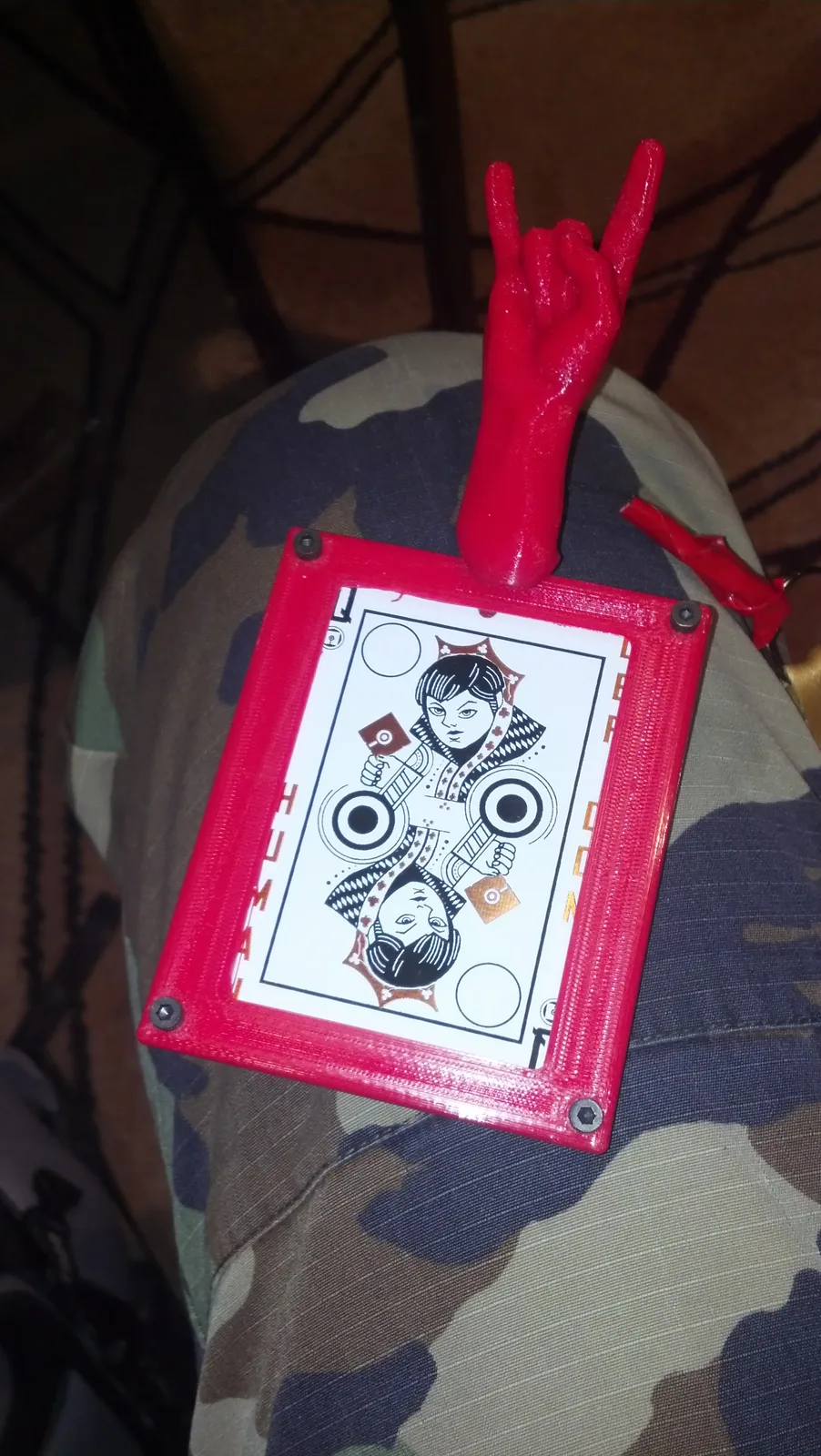
Non-electronic PCB playing-card puzzle badge
A Ryan Clarke-designed DEF CON 21 badge series built as poker-card printed circuit boards: non-powered identity artifacts whose copper, soldermask, silkscreen, inner-layer metal, role variants, and encoded face-card relationships formed a cryptographic and physical badge challenge.
People
Author of the Hackaday report used for the non-electronic-electronic badge framing and PCB construction details.
SourceThe public DEF CON 21 badge-contest writeup thanks Lost and Ellen for the challenge context.
SourceWIRED, Hackaday, and Malwarebytes identify Ryan Clarke as the DEF CON 21 badge designer and opening-ceremony badge presenter.
SourceThe writeup credits the solving and documentation team for the DEF CON 21 badge-contest walkthrough.
SourceIt records an important North American counterpoint in the DEF CON badge lineage: the badge was intentionally not an electronic gadget, yet still used PCB manufacturing, continuity probing, visual cryptography, social comparison, and event-space clues as hackable surfaces.
Poker-card badge artwork was fabricated as PCBs using silkscreen, soldermask, copper, and hidden inner-layer metal traces, per contemporary sources. WIRED documented human, press, vendor, speaker, goon, and black Uber variants, with more than forty variations across designs and mechanical-watch work in the Uber badge.
No firmware is claimed for the standard badge. The puzzle surface was physical and textual: continuity testing with a multimeter, encoded symbols, card relationships, DEF CON program clues, floor graphics, and web-hosted challenge material.
The DEF CON 21 theme leaned into tradition, time, playing cards, famous hacker face cards, hidden Easter eggs, and a one-time-pad Uber-badge puzzle that WIRED reported was solved months after the conference.
Lifecycle
WIRED documented the black Uber badge as a more elaborate artifact with a hand-assembled mechanical watch, exposed aging copper, and one-time-pad puzzle relevance.
SourceChallenge writeups document suit symbols, 3-bit binary values, pi/e/Gray-code/LFSR ordering, program text, floor graphics, and badge comparisons feeding the badge-contest solution path.
SourceThe DEF CON 21 badge used hidden PCB metal and interconnected paths that attendees could discover with a multimeter, making a non-powered board behave like a puzzle circuit.
SourceOperational history
The catalogue can show a real DEF CON 21 badge-case photo while preserving the full source original and avoiding WIRED, Hackaday, or writeup photos without complete provenance.
The compendium models the badge as a PCB identity and puzzle artifact and avoids firmware, MCU, LED, or battery claims for the standard badge.